

 AU & NZ
 SG
SG
 MY
MY
 US
US
 IE
IE
 PeopleXD
A guide to effective employee leave management
Managing employee leave becomes significantly more complex as organisations grow, particularly for medium to large UK businesses with multiple teams, locations, and policies. In 2025, the average number of sick days taken per employee has risen to 9.4. According to research by MetLife UK and former UK small business commissioner Liz Barclay1, short-term sickness alone may cost employers up to £13,800 per person each year.
When annual leave, parental leave, sickness absence, and unplanned time off are managed across hundreds or thousands of employees, HR teams face mounting pressure to maintain accuracy, consistency, and compliance.
With a well-structured approach to employee leave management in place, businesses can manage these requests fairly and effectively, significantly impacting company culture, employee well-being, and overall business success.
In this guide, we'll delve into the key aspects of effective employee leave management and explore the importance of clear policies, the benefits of using a staff holiday booking system, and how to ensure your leave management practices keep your employees happy and your business running smoothly.

What this page covers
- What is leave management?
- Why does rising absence make employee leave management essential in large businesses?
- How to manage staff holidays: 4 effective employee leave management tips
- What is a leave management system?
- What are the benefits of a leave management system?
- Driving organisational excellence with effective employee leave management
What is leave management?
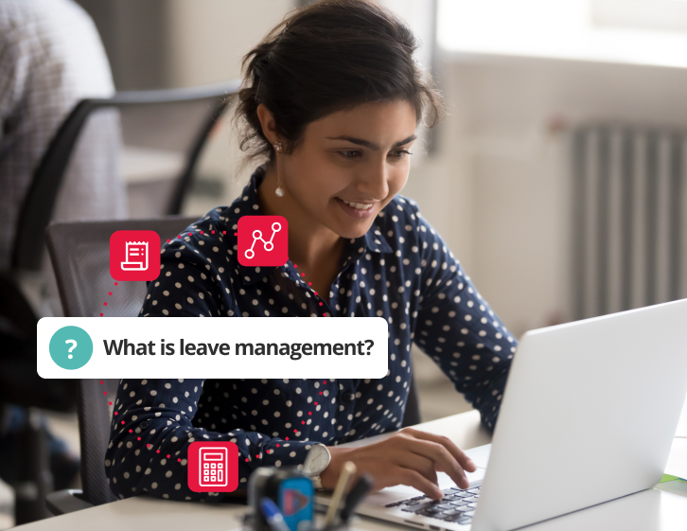
In medium and large organisations, leave management in HR is not just about tracking time off. It is an operational system that directly affects workforce planning, payroll accuracy, and business continuity. Leave management is the process of effectively managing and tracking employee time-off requests such as annual leave, sick days/medical leave, parental leave and emergency leave, following policies and procedures specific to your organisation.
Leave management encompasses everything from establishing clear company guidelines about the different leave types and how to request them, to tracking leave balances and ensuring fair and consistent approvals. It goes beyond recording time off and requires clear rules, consistent enforcement, and reliable data to support workforce planning and operational decision-making.
Why does rising absence make employee leave management essential in large businesses?
Effective leave management plays a vital role within an organisation, as it provides a clear picture of employee absences and workloads. The CIPD’s 2025 Health and Wellbeing at Work report, supported by Simplyhealth, found that the annual level of sickness absence had reached 9.4 days per employee, on average. The rise in absence highlights the importance of effective leave management at scale, as this visibility allows organisations to forecast resourcing gaps, avoid over-reliance on overtime, and reduce disruption to critical projects:
- Proactive workforce planning
- Ensuring business continuity
- Reducing work overload
- Reducing bottlenecks
With clear visibility into team availability, businesses can proactively address potential staffing gaps and distribute workloads accordingly, minimising the risk of being caught short-handed on critical projects. This transparency also facilitates fairer distribution of tasks and responsibilities among remaining team members.
By preventing situations where employees are overburdened due to unplanned absences or broader employee absenteeism, effective leave management helps organisations maintain normal operations, productivity levels, and employee well-being, reducing the risk of burnout. A focus on employee wellbeing and reducing the risk of burnout is pertinent due to increasing pressures in people’s lives, whether work related, family related, or financial. An effective employee leave management policy can be a step to solving some of the following issues:
- 91% of UK adults experienced high or extreme levels of stress at some point in the past year, and 34% felt this “always” or “often”. [mentalhealth-uk.org]
- One in five employees (21%) needed time off work due to poor mental health caused by stress. [mentalhealth-uk.org]
- 74% of UK workers report significant levels of burnout, with many struggling to get out of bed on workdays and wanting to leave their jobs. [hr-now.co.uk]
- Gen Z workers are burning out at double the rate of Baby Boomers, with half of 18–28-year-olds saying they feel burnt out “all the time” or “often”. [westfieldhealth.com]
HR software with AI integration can have a significant impact on a team’s ability to tackle these issues and improve their leave management processes, as Oli and Zoe point out:
“AI can outsource a lot of the admin that is really low value, so HR can spend time on the things that really matter - employee experience and wellbeing. It’s about freeing HR from the repetitive tasks that drain time and energy, so they can focus on creating a culture where people thrive.”
Oli Quayle, AI Evangelist, Access Group, in Episode 1: Mastering your employee lifecycle of our Do the Best Work of Your Life series.
“We don’t want to lose the human in this. Tech should free HR to focus on the moments that matter — those personal touches that make people feel valued. Automation is great for compliance and efficiency, but the real magic happens when HR uses that time to connect with employees and show they care.”
Zoe Wilson, Director at ReThink HR, in Episode 4: Make the best first impression of our Do the Best Work of Your Life series.
How to manage staff holidays: 4 effective employee leave management tips
Now that we've established the importance of strong leave management, let's explore how to manage leave of employees effectively:
1. Encourage open communication
A culture of open communication is key to smooth staff holiday management. In larger organisations, clear communication must be supported by defined processes and systems, ensuring leave requests are visible to managers across teams and departments.
2. Track leave balances and promote leave usage
Maintaining clear records of employee leave balances is crucial. Organisations can help prevent last-minute requests for large chunks of leave by encouraging staff to use their allocated days throughout the year. This can involve friendly reminders or offering incentives for timely leave usage.
3. Consider operational needs
While employee well-being is important, it's also essential to consider any operational needs when managing staff holiday requests. Implementing a fair and transparent policy that discourages a large number of employees being absent at the same time can help maintain business continuity. This may involve setting blackout periods during busy times, or limitations on consecutive leave days. Planning shifts effectively is key to maintaining business continuity. Download our guide to shift pattern mastery to learn proven techniques for optimising shift schedules, reducing overtime costs, and improving employee satisfaction.
4. Leverage technology
For organisations managing leave across multiple teams or locations, a dedicated leave management system becomes essential for consistency, control, and visibility. Oli Quayle, AI Evangelist at The Access Group, discusses the benefits of leveraging technology for leave related tasks:
“It’s about having the right people, at the right time, in the right place — and technology helps you do that at scale without drowning in admin. When you combine smart systems with predictive insights, you’re not just managing leave, you’re planning for productivity and wellbeing across the business.”
Episode 5: Making workforce management, work of our Do the Best Work of Your Life series.
Discover how to future-proof your workforce operations with our guide to operational workforce transformation, which provides actionable steps to streamline processes, reduce inefficiencies, and build resilience in your HR strategy.
What is a leave management system?
What is a leave management system?
A leave management system, also known as a staff holiday booking system, is a HR solution that streamlines the entire process of managing and tracking employee annual leave, sick leave, and other forms of time off. These systems offer a multitude of features that have been designed to improve efficiency and transparency in staff holiday management. This is particularly important for medium and large organisations, where manual processes and spreadsheets struggle to cope with volume, complexity, and compliance requirements.
Some of these features include:
Employee self-service
Self-service features allow employees to submit leave requests directly through the system, specifying leave type, dates, and reasons for absence. This empowers them to manage their leave allowances and view their remaining balances in real-time whilst providing visibility of their team’s availability.
Automated tracking and calculations
Most leave management systems automatically track and calculate remaining annual leave balances for each employee, eliminating the need for manual tracking which reduces the risk of errors.
Approval workflows
Leave requests can be routed to designated managers or HR team members for electronic approval. This ensures a clear and consistent approval process, with built-in notifications for both employees and managers.
Integration with payroll systems
Many leave management systems integrate seamlessly with payroll systems, allowing for automatic deductions of leave days from pay.
This integration between HR and payroll systems could help reduce administrative burden and minimise the risk of payroll errors related to leave. When your absence data flows directly into payroll calculations, you're removing the need for manual data entry and the potential for human error that comes with it. This means employees are more likely to be paid accurately and on time, whilst your teams can focus on more strategic work. If you're considering how integrated systems could transform your wider HR operations beyond just leave management, read our article on the benefits of an integrated HR system to explore the broader efficiency gains organisations often experience.
Online leave management
Replacing paper-based leave requests with an online leave management system eliminates the need for printing, storing, and manually processing physical forms and data. This not only saves time and resources but also contributes to a more environmentally friendly approach.
The N Brown Group implemented a staff booking holiday system as part of a wider PeopleXD Evo suite.
Before implementing the solution, N Brown Group relied on paper-based processes for holiday approvals, which were slow, error-prone, and created compliance risks. By moving to a fully digital system, they eliminated manual bottlenecks and gained real-time visibility of leave data across their 1,800-strong workforce. This shift not only improved accuracy but also empowered employees with self-service holiday booking, reducing admin time for HR teams and managers. As Megan Weedon, People Manager for Policy Systems and Reward at N Brown Group, explains:
“We had pieces of paper going from one employee’s desk to another, waiting to be filled out and signed. It was slow and laborious. Now, with Access PeopleXD, everything is seamless and accessible, giving our people the same experience wherever they’re based.”

What are the benefits of a leave management system?
For medium and large organisations, a leave management system helps address challenges that become harder to manage as headcount, teams, and locations increase. Manual processes, spreadsheets, or disconnected tools often struggle to provide the control, consistency, and visibility needed at scale.
1. Centralised platform for control and consistency
A leave management system provides a single, centralised platform for all leave‑related information, replacing paper forms, email chains, and fragmented spreadsheets. For larger organisations, this centralisation is essential to ensure policies are applied consistently across departments, teams, and locations.
Having one source of truth reduces confusion around leave entitlements, carry‑over rules, and approval decisions, while giving HR teams greater oversight of leave activity across the organisation.
2. Reporting and analytics for workforce planning
As organisations grow, understanding leave patterns becomes increasingly important. Leave management systems provide reporting and analytics that help HR and operations teams identify trends such as high absence periods, under‑used leave, or repeated short‑term absences.
These insights support more effective workforce planning by allowing businesses to anticipate resourcing gaps, adjust staffing levels during peak periods, and review whether existing leave policies are fit for purpose. Access to accurate leave data also supports better decision‑making at both operational and strategic levels.
3. Payroll and HR system integration
For medium and large organisations, integrating leave management with payroll and wider HR systems is critical. Automated data flow between systems reduces the need for manual data entry and lowers the risk of payroll errors related to leave, such as incorrect deductions or missed statutory payments.
This integration helps ensure employees are paid accurately and on time, while reducing administrative effort for HR and payroll teams. It also improves data consistency across the organisation, supporting compliance and audit requirements.
4. Employee self‑service at scale
Employee self‑service remains an important benefit, but for larger organisations it works best when built on top of strong systems and controls. Self‑service functionality allows employees to submit leave requests, view remaining balances, and check team availability in real time.
This reduces routine administrative tasks for managers and HR teams, while giving employees clarity and autonomy over their leave. At scale, this visibility helps minimise last‑minute requests and supports more predictable workforce planning.
All these features form part of a fully integrated HR suite like PeopleXD Evo. By embedding leave management within a broader ecosystem of HR tools, organisations gain seamless connectivity between absence tracking, payroll, workforce planning, and compliance. This integration ensures data consistency, reduces manual effort, and provides a unified experience for employees and HR teams, making PeopleXD Evo a comprehensive solution for managing the entire employee lifecycle.
Discover what leave management looks like with PeopleXD Evo in our short clip and find out more about the solution.
Driving organisational excellence with effective employee leave management
As organisations grow, managing employee leave becomes a matter of control, accuracy, and continuity rather than simple administration. Medium and large businesses need reliable systems that can handle volume, complexity, and change without introducing risk or unnecessary manual effort.
Effective leave management gives HR and operations teams clear visibility of workforce availability, supports consistent decision‑making, and reduces the likelihood of payroll errors or resourcing gaps. When leave data is centralised, integrated, and easy to analyse, organisations are better equipped to plan, respond to absence trends, and maintain operational stability.
Implementing a dedicated leave management system helps establish these foundations. By reducing administrative friction and improving access to accurate data, businesses can manage leave more confidently at scale while ensuring employees are treated fairly and consistently.
Ready to transform your leave management process?
Discover our staff holiday booking system and start driving organisational excellence today.
Ready to transform your HR experience?

Book a demo
Spend 30 minutes with one of our product experts who will build a personalised demo with the features you need to see.

Build a Business Case
Invest in our product with confidence through a personalised, Board-ready, ROI Report - delivered within 48 hours.

HR suite brochure
Find out how our HR platform can help you achieve your business goals.
Learn more with our HR and Payroll blogs
Our HR and payroll blogs offer advice and guidance from industry experts.

24 employee engagement survey questions (with examples and best practices)

What office jargon tells us about disconnect in the hybrid workplace

AI in Employee Benefits: How Large Employers Can Improve Engagement Without Increasing Risk

Will Your HR System Scale With Your Business?

What are the top tools for managing hybrid teams in growing businesses?

2026/27 HR Budget: From Cost Management to Strategic Impact

10 Mistakes to Avoid When Choosing an HRIS Software Vendor

How can your business provide effective menopause support in the workplace?

How can on demand pay improve employee financial wellbeing and workforce stability?