

 AU & NZ
 SG
SG
 MY
MY
 US
US
 IE
IE

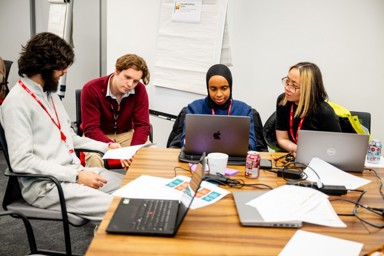
The initiative, taking place across three locations this week, challenges students to apply AI to real-world sustainability issues including energy efficiency, carbon reduction, water use and waste.
The programme began in the UK on 16 April at Access’ Loughborough HQ in the UK, with students from Loughborough University and Aston University. Further hackathons are taking place today (22 April) in Timișoara, Romania, and Kuala Lumpur, Malaysia, as part of a coordinated global Earth Day initiative.
The hackathon is designed to address two growing challenges: the transition to a greener economy and the shortage of talent with expertise in both AI and sustainability. By working directly with universities, Access is giving students hands-on experience applying AI in a real business context.
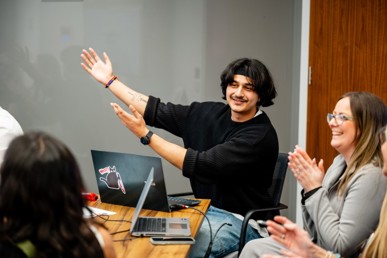
The winning UK concept, Promptly, was developed by a team of Computer Science students from Loughborough and Aston universities. The tool monitors AI prompts in real time and rewrites them to improve energy efficiency, while estimating the associated carbon and water savings.
 |
 |
Dilen Shingadia, Year 3 Computer Science student from Aston University and a member of the winning team, said: “I joined the hackathon not quite knowing what to expect and I left feeling genuinely fulfilled. Promptly came from the idea that if millions of people are using AI every day, even small improvements in how those prompts are written could add up to real energy, carbon and water savings, and we wanted to make that visible to people in the moment they're using it.”
Other concepts included GreenFarm AI, a soil and crop optimisation tool; SiteEye, which targets waste in construction and Verd.ai, designed to improve energy and water efficiency in public buildings.
Students were supported by Access mentors, who encouraged teams to consider not only technical performance but also energy efficiency, bias, explainability and real-world feasibility.
Jon Jorgensen, Co-CEO at The Access Group, said: “AI is going to be part of almost every job, in every sector - that’s the reality students are walking into. So the question isn’t whether people use AI, it’s how they use it. As a UN Global Compact signatory, we take that responsibility seriously. We want young people entering the workforce to understand that AI isn’t just about speed or scale or taking their jobs, it’s about intent and responsibility. When you apply it in areas like corporate sustainability, it can make a real difference to reducing environmental impact.”
Projects were judged by a panel including Access CTO Thad Szell and Director of Sustainability Carla Matthews, with entries assessed on environmental impact, technical approach and responsible AI use.
Following the pitches, Thad commented: “We were genuinely impressed by the creativity, rigour and ambition of the students’ ideas. The teams weren’t just applying AI to environmental problems, they were thinking carefully about whether their approach was appropriate, explainable and fair.”
The Global University Hackathons form part of Access’s ongoing commitment to developing the skills the future economy needs, giving young people from a wide range of disciplines practical exposure to enterprise-grade AI and the responsibilities that come with its use.