AU & NZ
 SG
SG
 MY
MY
 US
US
 IE
IE

9 Ways to Increase Staff Retention in Your Hospitality Business
It probably comes as no surprise that the hospitality sector continues to experience one of the highest rates of employee turnover in the UK at 52%. Perceived negatives of working in the sector, such as low wages, long shifts and working weekends and holidays can put some people off seeing hospitality work as a long-term career prospect. And for businesses, the effect of this perception is an almost perpetual costly cycle of recruitment and onboarding.
It's something we hear constantly here at Access Hospitality. Whether we're talking to operators about scheduling, learning and development, or people management, staff retention always comes up. The hospitality leaders we work with know that keeping great people is one of the most important things they can do for their business, and they want practical, actionable ways to make it happen.
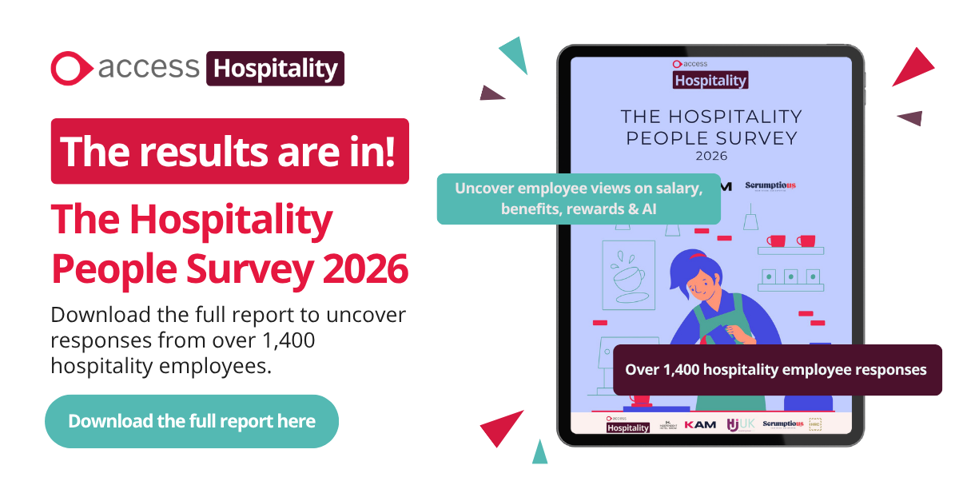
Our 2026 Hospitality People Survey gives us a clearer picture than ever of what's driving employees to stay or leave, and based on the findings, we’ve pulled together nine up-to-date strategies to improve staff retention, which is what you’ll find in this article.
Why does hospitality have a high staff turnover?
Hospitality has historically struggled with high turnover due to unsociable hours, minimum or zero-hours contracts, and a perception that the sector lacks long-term career pathways.
All the above can be true, but our data shows that things are starting to change.
The top factors – according to our survey, most likely to keep hospitality employees in their current roles are:
-
Working with great people (72%)
-
Exciting work and challenges (68%, up 19 percentage points since 2025)
-
Learning and development (59%, up 13 percentage points since 2025)
-
Career growth (51%)
-
Supportive management (50%)
The dramatic rise of 'exciting work' and 'learning and development' as retention drivers is the most significant shift in this year's data, showing that hospitality employees are increasingly motivated by growth and stimulation - not just job security. What does it mean for you, as the operator? That if you fail to build an engaging, developmental environment, you might struggle to keep your best people.
Strategies for attracting and retaining top talent in hospitality
1. Recruit for attitude, not just experience
Effective retention starts at the point of hire. Prior experience has its place, but it shouldn’t be the only, or even the main, thing you look for when recruiting.
Our 2026 Hospitality People Survey found that 55% of employees consider diversity and inclusion important when choosing a new employer, and 51% value transparency.
Your recruitment process, from the job advert to the interview, should reflect these values authentically. Write job descriptions that clearly outline development opportunities, flexible working options, and what day‑to‑day life in your business really looks like.
You have around 15 seconds to make an impression with a job advert - use them wisely and be honest.
It’s not all sunshine and roses in hospitality, but if we’re honest about that from the beginning, and we show people the real leaders and real teams they’ll be joining - we attract candidates who are right for us, and who stay.
Gemma Tracey MCIPD, FIH, Champneys Spa
2. Build a benefits package that employees care about
Offering benefits that look good on paper but are rarely used is one of the most common mistakes in hospitality recruitment. Our survey data unsurprisingly shows a telling gap between benefits available, and benefits actually used.
The most valued employee benefits in 2026, in order of importance, are:
-
A fair salary (56%)
-
Holiday entitlement (53%)
-
Training and development sessions (52%)
-
Flexible hours (51%)
-
Bonus/tips (47%)
-
Mentoring (47%)
On the usage side, training and development sessions have risen sharply in actual use, up significantly from 2025, alongside mentoring, flexible hours, and shared parental leave. This tells us that employees aren't just saying development matters; they're actively using it when it's available.
Notably, wellbeing sessions and counselling have dropped in the rankings despite remaining on the list.
Employers should audit which benefits are genuinely being used and focus investment there, rather than padding out a long list of perks that gather dust. The key is ensuring that your business is offering a competitive opportunity with clearly communicated benefits outlined and made easy to utilise.
3. Make career development your strongest retention tool
This is the biggest strategic shift the 2026 data points to. Career development is no longer a 'nice to have'; it is now the central driver of retention in hospitality.
'Learning and development' as a reason to stay in a role has risen 13 percentage points year-on-year. Training and development sessions are valued by 52% of employees as an important benefit, also up from previous years, and actual usage has climbed sharply, too.
The 2026 data also shows that 44% of employees feel they have received some training but not enough, up from 35% in 2025, which signals rising expectations. Basic access to training is no longer sufficient; employees want structured, career-oriented development pathways.
To build a genuine culture of development in your business:
-
Create a strong onboarding programme that sets new starters up for confidence, not just compliance.
-
Offer structured progression pathways so employees can see exactly where they're heading.
-
Invest in mentoring programmes, because mentoring is now valued by 47% of employees and is being used more than ever.
-
Expand apprenticeship provision. The 2026 survey shows a 4% year-on-year increase in companies offering apprenticeships, now at 49%.
-
Share internal success stories of people who have grown within the business as these stories demonstrate that progression is real, not just promotional.
4. Address the work-life balance decline urgently
This is a genuine warning signal in the 2026 data. The proportion of hospitality employees reporting a good work-life balance has fallen for the third consecutive year:
-
2024: 59% reported a good work-life balance
-
2025: 56%
-
2026: 53%
The proportion describing their balance as 'not balanced at all' or 'not very balanced' has risen to 45% in 2026, up from 33% in 2024.
The survey points to a key distinction: flexibility in hospitality isn’t about working from home or cutting their hours. What really matters is reliable, predictable scheduling – having enough notice of shifts, fewer last‑minute changes, and rotas that fit around life outside of work.
Without consistency and advance notice of shifts, employees struggle to manage personal commitments, which erodes their sense of control even if total hours haven't dramatically increased.
Practical steps employers can take:
-
Give adequate advance notice of rotas; employees cannot plan their lives around last-minute schedules.
-
Invest in rota management software that uses AI to improve forecasting and create more consistent staffing patterns.
-
Offer genuine flexibility, not just variable hours and accommodate personal circumstances where possible.
5. Tackle the imposter syndrome problem
This is a new and important finding from the 2026 survey that employers need to pay attention to. Imposter syndrome - feeling undeserving of one's role or salary, has risen sharply.
In 2025, 38% of employees reported experiencing imposter syndrome after a salary increase or promotion. In 2026, that figure jumped to 81%.
While it's positive that more employees are being promoted and recognised, rapid advancement without adequate support is creating psychological strain. Employees are stepping into larger, more demanding roles and struggling to feel confident in them.
Ways for you as an operator to respond by:
-
Pair promotions with structured mentoring and development support, not just a new job title.
-
Create safe spaces for managers and team leaders where you can discuss challenges openly.
-
Build in check-ins during the first 6 -12 months after a promotion to provide coaching and reassurance.
-
Normalise conversations about self-doubt within your culture.
6. Recognise and reward your people consistently
Creating a positive culture of recognition improves retention significantly. Gallup and Workhuman’s 2024 longitudinal research found that well‑recognised employees were 45% less likely to have turned over after two years than their peers.
Our 2026 Hospitality People Survey echoes this. When asked what would keep them in their current role, hospitality employees highlighted:
-
Learning and development (59%) – feeling their skills are being invested in, not left to stagnate.
-
Career growth (51%) – seeing a path forward and opportunities to progress.
-
Supportive management/good manager (50%) – having leaders who back them, listen and give credit where it’s due.
7. Create a genuinely inclusive and safe workplace
Hospitality's diverse workforce is one of its greatest strengths and employees value it. 55% respondents of our survey consider diversity and inclusion important when choosing a new employer, making it the single most important factor when evaluating a potential employer.
However, the data also shows a noticeable year‑on‑year decline in employees agreeing that “the hospitality industry has a diverse workforce”, and a smaller drop in those agreeing their own company does.
To close this gap between expectation and reality, employers can:
-
Communicate diversity, equality, and inclusion policies clearly to all staff.
-
Create structured opportunities for underrepresented groups.
-
Support cultural events and calendar dates across the year.
-
Provide accessible training in multiple formats and languages where needed.
An inclusive environment isn't just the right thing to do, it directly influences whether potential candidates choose you over a competitor.
8. Use AI and technology thoughtfully
The 2026 survey shows significant growth in positive attitudes towards AI in hospitality: 52% of employees now see AI as a helpful tool, up from 41% in 2025, and 98% believe AI could improve their job satisfaction by automating repetitive tasks.
At the same time, more employees report that technology has made their daily tasks harder – a sign that implementation, not the technology itself, is the problem. Poorly rolled‑out systems create friction and frustration, which can undermine engagement and retention.
Used well, technology can be a powerful retention tool:
-
AI‑powered rota scheduling can reduce last‑minute changes and improve work‑life balance.
-
Digital learning platforms enable self‑directed development at any time, from anywhere.
-
HR and payroll technology ensures accurate, on‑time pay – a foundational expectation.
-
Employee wellbeing tools give managers real‑time insight into engagement, fatigue and burnout risk, so they can intervene early and support their teams more effectively.
-
Smart AI assistants can also handle day‑to‑day queries and admin, freeing managers to focus on coaching and one‑to‑one conversations instead of chasing data.
91% of employees say technology helps them manage their time between work and personal life, a clear signal that the right tools make a positive difference.
The key is to deploy technology that solves real problems for your people, not just operational ones for the business. Involve staff in tech decisions, provide training, and measure impact so changes genuinely make their jobs easier.
And that's the nuance HR teams need to hold onto. The technology is there, but choosing the right tool for the right problem, and implementing it well, is everything.
Rob Paterson
Commercial Director - Hospitality People Suite, The Access Group
9. Listen to your employees and act on what you hear
Employee satisfaction has declined for the third year in a row:
-
2024: 69% were happy in their current role
-
2025: 61%
-
2026: 54%
But here's the crucial nuance: willingness to recommend a career in hospitality has risen to 93% in 2026, up from 74% in 2025. Employees love the industry, but they're struggling with the current operating environment.
This is a workforce experiencing pressure, not disengagement, and that distinction matters for how operators respond.
Regular, structured listening is one of the most powerful things you can do to retain staff. That might mean running short wellbeing or pulse surveys, collecting shift‑by‑shift feedback in your scheduling tools, or building simple check‑ins into team meetings – anything that gives you a real view of satisfaction, development, benefits usage, work‑life balance and day‑to‑day pain points. Then – critically – act on what you hear.
If you do not yet have a structured way to collect and act on this feedback, it may be worth exploring dedicated employee engagement tools built for hospitality to bring surveys, check‑ins and insights into one place.
How our Hospitality People Suite helps you keep great people
Turning these nine strategies into reality is easier when your tools are connected. Hospitality People Suite brings recruitment, scheduling, learning, HR and payroll into one joined‑up platform, so you can support retention at every stage of the employee lifecycle.
With Hospitality People Suite, you can:
-
Hire better, faster – Use Recruitment module to attract the right candidates, cut time‑to‑hire and reduce mis‑hires, aligning with employees’ rising expectations around transparency and progression.
-
Give every new starter a clear path – Deliver structured onboarding, compliance and development journeys through Learning and Development Module meeting the 59% who stay for learning & development and 51% who stay for career growth.
-
Fix work–life balance at the rota level – Use HR and Workforce Management Module to forecast demand accurately, reduce last‑minute changes and support healthier working patterns as work–life balance scores decline.
-
Support managers to lead, not just schedule – Give managers a single view of rotas, leave, performance and training so they can act as coaches, not just task delegators – addressing the 50% of employees who stay for supportive management.
-
Listen and respond in real time – Run pulse or wellbeing surveys and capture shift‑level feedback with Employee Engagement tools, so you can spot pressure points early and show teams that their voice leads to action.
-
Get the basics right, every time – Automate pay, contracts and entitlements with Hospitality Payroll Software, reducing admin errors and freeing leaders to focus on development, recognition and culture – the areas employees say matter most.
Together, these modules help you move from firefighting turnover to building a predictable, data‑led retention strategy that matches what hospitality employees are telling you they want in 2026.
Ready to boost staff retention in your business?
You found this article because you’re looking to improve staff retention in your hospitality business. Hopefully, some of the practical strategies we’ve looked at will be an effective starting point to make positive changes in your operation.
The 2026 HJUK Hospitality People Survey paints a picture of an industry that is professionalising rapidly, but also one where employee expectations are rising just as fast.
Operators who invest in structured career growth, supportive leadership, consistent scheduling and genuine listening will be best positioned to convert resilience into long-term retention and build the teams they need to thrive in 2026 and beyond.
Here at Access Hospitality, we have specialist software to support every stage of this journey. Get in touch with our friendly team to:
-
explore how Hospitality People Suite can help you turn these strategies into day‑to‑day practice
-
see exactly where scheduling, learning, HR and engagement tools could make the biggest impact in your business
-
build a tailored roadmap to improve retention, reduce churn costs and create a workplace people want to stay in
Ready to find out what this could look like for your venues? Book a conversation with our team and start building a more stable, resilient workforce today.