AU & NZ
 SG
SG
 MY
MY
 US
US
 IE
IE

 Volunteer Management
Volunteer experience reimagined: designing experiences volunteers choose
Volunteering has always been rooted in generosity, but generosity alone isn't what sustains it.
While public interest in volunteering remains strong in the UK, turning that interest into long-term involvement is becoming increasingly difficult.
One reason? People are balancing work, family commitments, financial pressures, wellbeing and the growing demand on their time and attention. Volunteering really is a conscious choice.
Many charities are starting to rethink how they approach volunteer experience and involvement. Rather than focusing solely on increasing recruitment, there's another question being asked:
What kind of volunteer experience will people actively choose and stay for?
The answer usually lies in creating experiences that are meaningful, flexible, rewarding and designed around the realities of life. This guide explores how charities can do exactly that.

The volunteering landscape
Conversations about volunteering often focus on declining participation rates, but the reality is more complex.
The data is often framed as a simple decline, but online searches for volunteering opportunities rose 13% across the UK in the year to February 2025. A lack of goodwill certainly doesn't seem to be the challenge. People want to volunteer.
Part of what's changed is potentially how much they're weighing it up against everything else, and what their experience is like when they get there.
In 2026, volunteering competes with paid work and side hustles, caring responsibilities, factoring in rest and so much more. Choosing to volunteer is something else to add to a long list of things to think about – and some people are even managing volunteering, or wanting to volunteer, for more than one cause.
That last point matters more than it often gets acknowledged.
Over half of recent volunteers (55%) gave their time to more than one organisation in the last year – 29% to two organisations and 26% to three or more (NCVO).
People are increasingly giving their time to multiple causes, as they support numerous charities that mean something to them. An environmental charity here, a children's hospice there. People are passionate, and often about more than one thing.
This means your organisation is likely one option among several they're weighing. That reframe – from volunteer shortage to volunteer experience competition – can help change your approach.
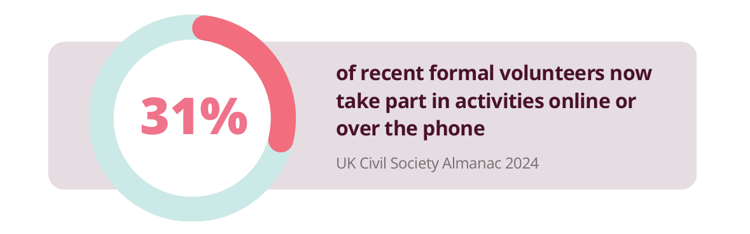
A further 31% of recent formal volunteers now take part in activities online or over the phone too, which means the experience you design needs to hold up in digital contexts too, not just in person.
How important are first impressions?
Recruitment isn’t admin ... it’s the opening scene.
Someone sees an online ad, a post or hears a conversation. They think, maybe I could help. What happens next determines whether that spark turns into action.
As Shaf Mansour, Head of Charity Product at Access Not for Profit puts it:
“Searching for opportunities online is usually only the start of the volunteer journey. Enthusiasm can soon wane if there are barriers along the way, such as, if roles are inflexible, or the application process is too time-consuming."
In 2026, volunteers are benchmarking that process against every other digital interaction in their lives. The bar is high and mostly invisible. This is where intentional volunteer experience design shines. Is your recruitment:
- Clear - roles describe impact, not just tasks
- Proportionate – the effort to join matches the commitment
- Human – responses are personalised and timely
Simple things that say, we see you and we’re glad you’re here. Charities that do this well attract the right volunteers, with clearer expectations and stronger commitment from day one.
Charities that get this right attract volunteers with clearer expectations and stronger commitment from day one. The question to ask is simple: what does it actually feel like to say yes to volunteering with us?
Useful read: Katherine Gale, Head of Volunteering at Young Enterprise, suggests a great exercise for understanding the realities of your volunteer experience and first impressions, here.
A great volunteer experience is people being able to give their skills, expertise, passions and joys in life to support young people. We aim to have a bit of something for everyone."
Meaningful volunteer experience: from tasks to identity
People don't volunteer to complete tasks, they volunteer to become part of something bigger.
That shift in framing has real consequences for how roles are designed. A role description that lists duties is very different from one that explains why the role exists and what changes because of it.
One Manchester Action on Street Heath volunteer described exactly this effect:
"Volunteering with MASH has really emphasised my passion for supporting charities and communities."
They aren't describing what they did or do, they're describing who it made them and how it made them feel.
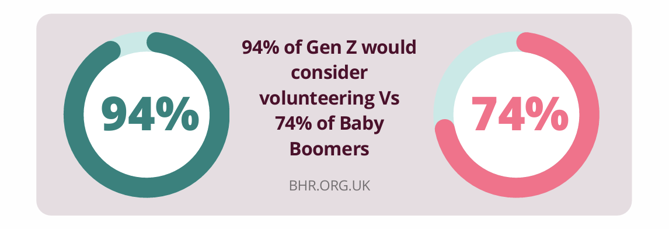
And, who are volunteers nowadays? 94% of Gen Z say they would consider volunteering, compared with 74% of Baby Boomers, but younger volunteers in particular are looking for roles that fit the values and identity they're building. A genuinely meaningful volunteer experience that caters to all tends to include four things:
- purpose (understanding why the role exists)
- belonging (feeling part of a team or mission)
- agency (control over time, pace and contribution)
- growth (skills, confidence or connection gained)
Hours logged are a poor proxy for any of them.
Liz Turner, Head of Community and Volunteering at Make-A-Wish UK, puts it simply:
"If someone gives you their time, make sure it's spent doing what they signed up for."
Onboarding without overwhelm
The real job of volunteer onboarding is confidence.
How quickly does someone feel able to contribute, especially without fear of getting it wrong? A volunteer who leaves their first session feeling capable is far more likely to come back than one who left feeling overwhelmed by information.
Strong onboarding experiences are critical for positive volunteer experience, and typically prioritise clarity over completeness, reassurance over rules, and early contribution over full training (where appropriate). In practice, that means:
- A clear first task – what's something achievable that creates an early win?
- Knowing exactly who to ask for help
- Access to everything essential in one place
- A sense of welcome rather than evaluation
The reframed question for any onboarding process: will they feel ready to go from the start?
Keeping volunteers engaged: trust maintenance
Retention doesn't usually fail dramatically, but erodes quietly.
Generic communications, sporadic recognition, volunteers who feel invisible – these are often the slow drains that cost charities their most committed people.
Because every volunteer carries an unspoken agreement with your organisation. It sounds something like: if I give you my time for free, will it be respected?
When that question gets answered well, the results show. A recent volunteer survey at Rainbows Hospice for Children & Young People found that 98% of volunteers feel appreciated, 98% enjoy their volunteering, and 100% feel proud to volunteer there. One volunteer put it simply:
"Rainbows is the most amazing place to volunteer. It's like being in a big family full of love and kindness."
The same quality of experience comes through at Manchester Action on Street Health. One volunteer described her experience this way:
"From the first day, I felt seen, valued, and understood, not just as someone who had been unwell, but as someone who still had so much to give. It rebuilt my confidence and reconnected me with what I love most: helping others."
That phrase – still had so much to give – is worth sitting with. The best volunteer experiences aren't just about what volunteers contribute, they're also focus on what volunteers gain.
Healthy volunteer experiences are built on timely and relevant communication, recognition that feels personal, an understanding of contribution over time, and flexibility when lives change (because they always do.)
The shift to make is this: retention isn't about keeping people motivated, but maintaining trust.
How does technology help?
Technology: infrastructure over software
Great experiences feel simple but, behind the scenes, they rarely are.
Think of theatres or airlines ... the smoother the experience for the person in it, the more invisible the infrastructure holding it together.
Volunteering is no different. Digital tools now underpin recruitment and role matching, scheduling and availability, communications, compliance and reporting. Charities that use strong volunteer management software (VMS) are better positioned to offer flexibility, reduce admin, recognition and understand engagement patterns.
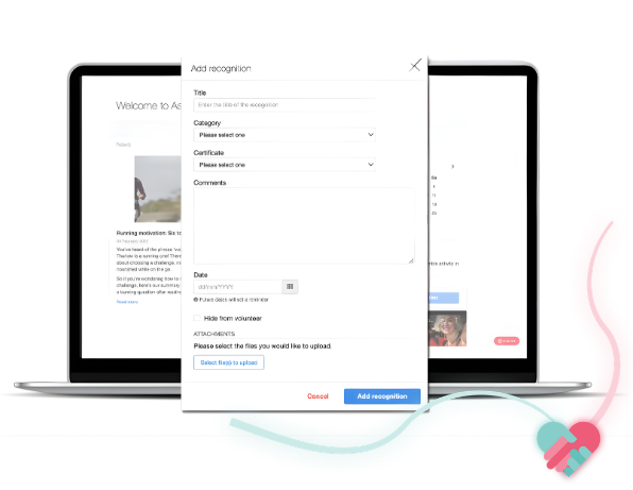
A VMS like Access Assemble functions as that experience infrastructure. Complexity is handled backstage, while your volunteers see clarity and ease and you gain visibility and control.
The point isn't always the features and functions of the software itself either, it's what the software protects your time for, and what you can then do with it.
Good software doesn't replace relationships, it creates the best conditions to nurture them.
The question worth asking: what friction are your volunteers feeling that you don't currently see, and could a VMS help?
Make-A-Wish UK
If any charity understands what makes an experience great, it's Make-A-Wish UK.
The charity exists to grant life-changing wishes to children living with critical illnesses – and behind every one of those moments is a network of volunteers. Without them, wishes simply wouldn't happen.
Managing that network used to be a challenge, and volunteers were being asked to navigate different platforms just to complete a single task.
"It was heartbreaking. We were losing volunteers not because they didn't care, but because the tech was too complicated."
After adopting Access Assemble, including a bespoke integration with their existing Salesforce system, the picture changed.
Wish discovery tasks now flow directly into Assemble, volunteers self-assign via a mobile app in seconds, and the team received over 90 applications in four weeks when recruiting for flagship wish maker roles.
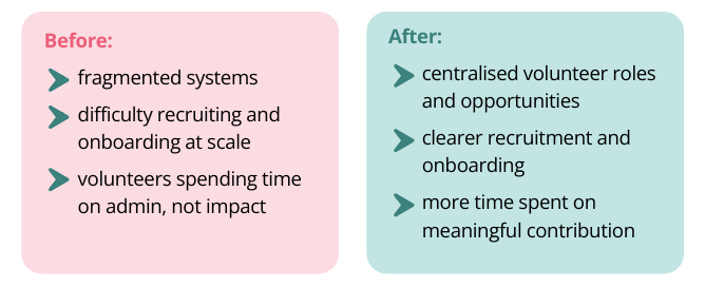
Liz reflects: "We’re a small team, but we have hundreds of volunteers. Without Assemble, I don’t know how we’d manage.”
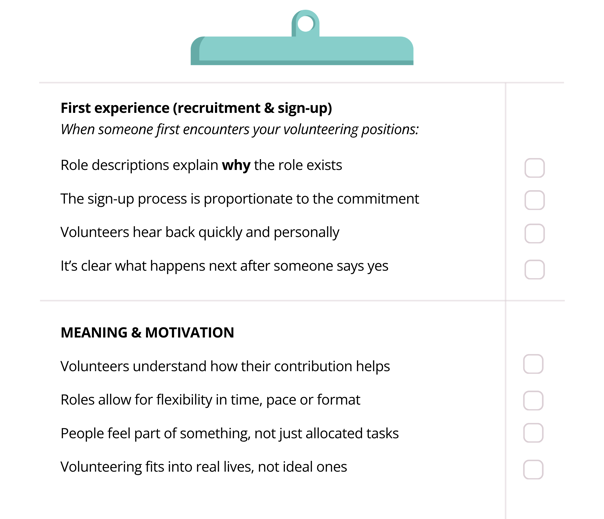
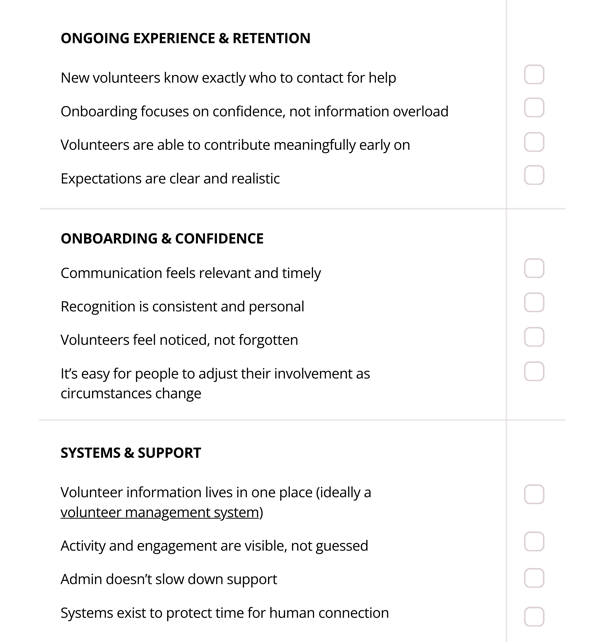
Your volunteer experience checklist
Use this checklist as a quick sense-check.
It's by no means a performance review, but an honest and fast look at where your volunteer experience is working, and where could be improved.
Where next?
Reimagining the volunteer experience rarely means starting from scratch. But, can you look at what already exists through a different lens, and be honest about what you find?
The charities giving great volunteer experiences aren't necessarily the biggest or the best-resourced, but the ones asking better questions:
- Where does volunteering feel harder than it should?
- Where are volunteers most likely to drop off or disengage?
- Where does admin get in the way of connection?
- How well are you using the technology available to you?
Pick one, start there. Your volunteer experience isn't built in a single initiative, but shaped by small decisions, made consistently, over time.
And if you want to see what that can look like with the right tools behind it, the Access Assemble product tour is a great place to start.