

 AU & NZ
 SG
 MY
 US
 IE


Challenge
Heatons Group planned its deliveries by hand, with managers using Google Maps and experience to plan routes across five depots, starting as early as 4:30am.
Planning took around an hour a day.
Reallocating a sick driver's drops meant updating up to 60 delivery records manually.
Around 30% of orders led to a customer query, most of them asking "Is it being delivered today?"
Approach
Heatons' in-house IT team and Access MaxOptra built an integration with its Horizon back-office system. With one button press, jobs flow into Access MaxOptra, and delivery updates post back to Horizon in real time.
The team also built years of driver knowledge into the routing rules, such as school run restrictions, site-specific delivery windows and longer drop times for heavy paper deliveries.
Customers now get a delivery window that adjusts with each driver's departure, a dispatch notification, and a photo and signature on delivery.
Results
- Daily route planning time fell from about an hour to under 15 minutes.
- Manual updates that once took an hour now happen in a second.
- Proactive dispatch and delivery notifications mean customers no longer need to call to ask where their order is.
- 86% of orders, from 450 to 500 drops a day, are delivered before midday.
- The team now tracks on-time-in-full and sees the true cost of extra deliveries. Heatons also used Access MaxOptra to model the D3 Office acquisition before day one, which showed it needed six vans, not five.
Route planning wasn't something we were going to change for, and actually it became the only thing we changed for. The second we saw the route planning side of things, we thought - we've been missing a trick!
About Heatons Group
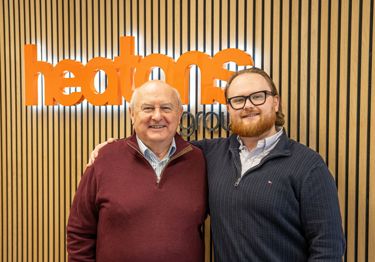
Founded in 1986 when David Heaton Fielding and Berry Carter started a small stationery business in Hoylake, Heatons Group has grown into one of the UK's largest independent business supplies providers. What began as a local service built on competitive prices and personal care has evolved - through organic growth and strategic acquisition - into a multi-division operation with a turnover of over £22 million, more than 120 employees, and locations across Merseyside, Cumbria, Cheshire & Yorkshire.
Today, Heatons Group operates as a single point of contact for all of a business's supply needs. Its divisions span business supplies, office interiors, design and print, promotional gifts, workwear and PPE, and facilities supplies - all underpinned by a promise to save customers time and money through consolidated purchasing and high levels of personal service.
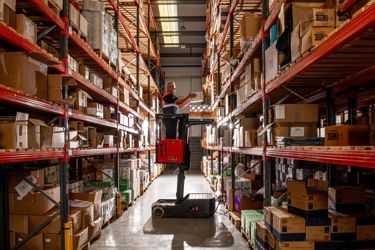
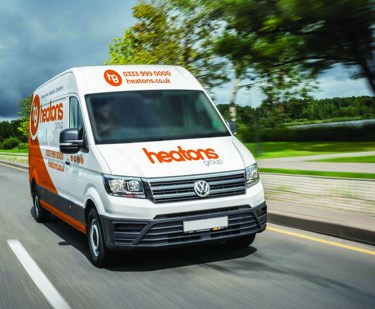
At the heart of that promise is a delivery operation that covers over 24,000 product lines available for next-day delivery, fulfilled by Heatons' own fleet of drivers across five depots and 25 vehicles, completing between 450 and 500 drops every day.
The Challenge
As Heatons Group expanded across multiple regions - from the dense urban streets of Merseyside to the rural roads of Cumbria - the complexity of managing its delivery operation grew significantly. Route planning was done manually, with delivery managers using Google Maps as a guide and their own experience to make sense of overlapping routes, driver availability, and customer requirements.
"We did it manually with a little bit of help from Google Maps," explains Tim Clixby, ICT Director. "It then took a human to go, I recommend you move A to B and C to D and D to E and so on."
The process was time-consuming and error-prone. Planning routes across five branches took delivery managers around an hour every day - work that started as early as 4:30 in the morning. When disruptions hit, such as drivers calling in sick, the knock-on effect was significant. Managers would have to manually update up to 60 individual delivery records in their back-office system to reflect the reallocation - a task that could take another hour on its own.
The human cost was compounded by a customer experience problem. An internal review revealed that 30% of all orders generated some form of query afterwards - and the vast majority of those queries were as simple as: "Is it being delivered today?" Customers weren't being kept informed proactively, and the team was spending valuable time answering questions that, as Tim puts it, "the answer was already on the screen in front of us."
For a business built on personal service and competing in a world where Amazon has set the benchmark for delivery transparency, this was a gap that needed closing.
The Solution
Heatons Group adopted Access MaxOptra initially after seeing its route optimisation capabilities - something that, as Tim recalls, wasn't even the original plan. "Route planning wasn't something we were going to change for, and actually it became the only thing we changed for. The second we saw the route planning side of things, we thought - we've been missing a trick!"
Rather than simply switching on a new tool, Heatons' in-house IT team, alongside Access MaxOptra, built a seamless integration linking their own back-office system, Horizon. With a single button press, all jobs flow directly into Access MaxOptra. Once routes are optimised and a driver presses "go" on their PDA, Access MaxOptra's API posts the updated information back into Horizon in real time - automatically adjusting customer-facing delivery windows and firing off personalised email notifications without any manual intervention.
What previously took an hour of manual updates now happens in a second.
The integration also powers a DPD-style delivery window experience: rather than giving customers a single estimated time, Heatons sends a window that adjusts dynamically based on when each driver actually departs. If a driver leaves 30 minutes early, all customer ETAs shift accordingly. If there's a delay, the window updates automatically. Customers receive a dispatch notification when the driver sets off, and a delivery confirmation - complete with a photograph and signature - once the order is signed for.
Beyond the integration, Access MaxOptra's algorithm has allowed Heatons to encode years of driver knowledge directly into the system. Deliveries to schools are blocked during the morning school run. A chilled foods factory customer receives its order in the morning; all other deliveries to that site are scheduled for the afternoon. Businesses with Wednesday afternoon closures are flagged. Heavy paper deliveries are automatically allocated 20 minutes rather than the standard 6. High-security sites - including nuclear facilities - are given the additional dwell time their access procedures require.
"We're trying to take the knowledge out of the drivers' heads and put it into the system," says Tim. "If we get it right, I could jump on a van and make the delivery - I don't have to know anything. I just go from step to step."
Implementation was smooth. With their Access MaxOptra Account Manager providing hands-on support, drawing on experience from similar customers to resolve edge cases quickly. Driver adoption followed once the team realised that following Access MaxOptra's optimised routes meant finishing their rounds earlier. Under Heatons' "job and finish" model - where drivers go home when the last colleague returns - there was a natural incentive to trust the system.
The Results
The impact of Access MaxOptra has been felt across planning efficiency, customer experience, and operational decision-making.
- Planning time has fallen from approximately one hour per day to under 15 minutes - a saving shared across three delivery managers and five branches that, as Tim notes, "adds up to a good few days saved per month."
- Customer queries have been dramatically reduced. The proactive dispatch and delivery notifications mean customers no longer need to ring in to ask whether their order is on its way. The 30% query rate that prompted the internal review has been directly addressed by giving customers the information they need, before they need to ask for it.
- 86% of orders are now delivered before midday - a statistic Heatons is proud to share with customers as a mark of service quality that rivals, and in some respects exceeds, the major carriers.
- On-time-in-full has become a metric Heatons now actively tracks and manages. Access MaxOptra's visibility has helped the team identify the true cost of multiple deliveries - including cases where a cheaper product from a different supplier actually costs more overall once the additional delivery is factored in. "It's helped our purchasing team reason: OK, it's great you've saved £2, but it's going to cost us £8 to go and do the delivery," says Tim.
The route optimisation also supports smarter fleet decisions day to day. Access MaxOptra can identify when 24 vans will suffice rather than 25, or flag when a single outlying drop is better handled by a courier than a driver making an 18-minute detour each way - a straightforward call in an industry where margins are tight and parcel values are often modest.
For drivers, the system has delivered a genuine quality-of-life improvement. Routes are more logical, the workload is distributed more evenly, and the "job and finish" model means that following Access MaxOptra's guidance translates directly into getting home earlier.
The best products you don't know are there. It's like a silent system.
The Future
Heatons Group is continuing to invest in the tools and integrations that keep the business ahead of customer expectations.
One initiative in progress is the integration of what3words into their delivery workflow. In rural locations - and even on large sites where the difference between reception and goods inwards can mean a wasted trip - precise location data makes a meaningful difference. When a driver completes a delivery at a new address without a what3words tag on file, a prompt automatically captures the location for future use. "Those little things are a big time saver and put us ahead of Amazon and competitors," says Tim.
Access MaxOptra is also playing a central role in Heatons' growth through acquisition. In April 2025, Heatons took over D3 Office, a well-established £7 million business based in Hull. Before day one of the takeover, Heatons used Access MaxOptra to run multiple scenarios on D3's historical delivery data - modelling fleet requirements, route structures, and depot configurations in advance.
The analysis revealed that D3 had historically run five vans a day, but actually needed six - a finding that allowed Heatons to go into the acquisition with the right resources in place, rather than discovering the gap after the fact. "Access MaxOptra was really good at helping us not go in blind on day one," says Tim. "We ran multiple scenarios - how many vans, how many drops - and we were able to get ahead of the game."
For the D3 team, the investment signal was clear. As Tim reflects: "They said they've had more investment in the business in six months since we've had it than in the 20 years previously. And you know you're investing in the right areas because you have that proof."
As Heatons continues to grow - whether through further acquisitions or expanding its existing divisions - Access MaxOptra will remain a core part of how the business plans, operates, and delivers on its promise of personal, reliable service.