

 AU & NZ
 SG
SG
 MY
MY
 US
US
 IE
IE
Restaurant invoice management: protecting profit, not just paying bills
For most restaurants, food and drink can swallow close to a third of sales – and invoice mistakes, missed credits and quiet price increases can chip away at your gross profit long before you notice. Invoice management is no longer just about “keeping the books tidy”; it underpins accurate cost of sales (COS), GP and cash‑flow.
If invoices don’t match what was ordered and received, every report that follows – stock, menu GP, site P&Ls – is built on shaky data. The good news is that a few simple changes in process, supported by the right purchasing tools, can dramatically reduce errors and admin while giving finance and operators a much clearer view of what’s really being spent.
At Access, with extensive experience supporting over 100,000 hospitality businesses across the UK and Ireland, we’ve developed deep insights into the best practices for streamlining invoice management.
In this article, we’ll look at what restaurant invoice management involves, the most common challenges, and practical steps you can take to streamline the process and protect your margins – including where technology can help.
What is restaurant invoice management?
In short, invoice management is the process of handling all invoices that come through a venue, whether they're from food and beverage suppliers, utility providers, or other service partners. Essentially, it's about ensuring that every purchase made by the restaurant is accurately recorded, verified, and paid for in a timely manner.
Invoices can arrive daily, and managing them involves keeping a detailed and organised record of all transactions. It also includes:
-
Receiving and logging invoices
-
Matching them against purchase orders or delivery notes
-
Verifying quantities and prices
-
Approving them for payment
-
Making sure they're paid on time
This might sound straightforward, but with fluctuating prices and multiple suppliers in the mix, things can get complicated. Various factors need to be carefully tracked and managed to avoid discrepancies, overpayments, or missed payments, all of which can lead to cash flow issues and strained supplier relationships.
Crucially, invoice data is also the raw material for your cost of sales (COS) reporting, gross profit (GP) analysis and variance tracking. If your invoices aren't accurate and up-to-date, neither are your margins, and that's a problem that compounds across every site and every reporting period.
So, what are the biggest challenges when it comes to invoice management?
We know that managing invoices in a restaurant setting can be frustrating and hard to stay on top of. With the constant flow of goods, services, and payments, it's easy for things to get overwhelming. Here are some common challenges.
Inconsistencies with your suppliers
Dealing with multiple suppliers and making sure deliveries align with invoices is a time-consuming process that leaves plenty of room for error. Any slip-up can throw off your whole inventory and going back and forth with suppliers to resolve discrepancies adds to the admin pile and strains relationships.
Cash Flow Problems
Effective invoice management is key to maintaining a healthy cash flow, but it's often easier said than done. Paying invoices too late can strain supplier relationships; paying too early can leave you short for your own expenses or payroll. Balancing the timing of outgoings with the inflow of revenue is a delicate act that manual processes make harder.
Error-Prone Systems
Many restaurants still rely on manual processes, sorting through paper invoices and entering data by hand leads to mistakes that are costly to fix. Human error causes disruptions in cash flow and creates headaches at month-end reconciliation.
Hidden costs and price fluctuations
If the last few years have taught hospitality operators anything, it's that food costs can move fast and without much warning. Since 2020, food prices have risen by 38.6% and while the worst of post-pandemic inflation has eased, food costs are climbing faster than general inflation again in 2025. Every unexpected price increase on an invoice that goes unchecked is margin quietly walking out the door.
Without automated price comparison and alerts, these fluctuations go unnoticed until they've already eroded your margins. Each missed price variance is a direct hit to your GP and the cumulative effect across a busy operation can be substantial.
Disconnected data
When invoices live in one system and your recipe costs, stock levels and GP reporting live in another, you're always working with incomplete information. The real cost of invoice inefficiency isn't just the admin time, it's the margin you can't see, the variances you can't explain, and the decisions you're making without a complete picture.
Why is streamlining this process so important?
We've explored what restaurant invoice management involves and the challenges that can affect its efficiency. But what are the concrete benefits of getting it right?
It saves you time
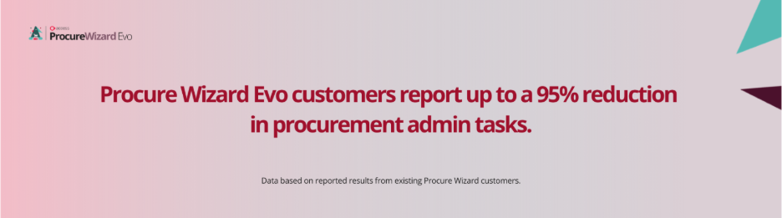
Automating invoice processing can reduce processing time by up to 95%, freeing up your team to focus on higher-value work, like maintaining guest experience and monitoring performance. That's not a small efficiency gain; for a busy multi-site operation, it can represent hundreds of hours a year.
It reduces the risk of error
Automated systems flag discrepancies between orders, deliveries, and invoices in real time, so issues are caught and resolved quickly. This also reduces the risk of overpaying suppliers or accepting incorrect deliveries, both of which damage your margins directly.
Better cash flow management
Efficient invoice processing helps venues track what they owe and when payments are due. With automated workflows and clear approval trails, you stay on top of outgoings without the chaos of manual chasing.
You nurture and maintain supplier relationships
Your relationship with suppliers is crucial to your restaurant's success. By maintaining clear, accurate and timely invoice management, you build trust, which means better deals, priority service, and a smoother operation overall.
“I still think now that I could go into any restaurant, look at a GP and make it better just by putting some fundamental steps in place. But if someone said to me, here's some tools to give you what your forecasting will be, your par – great, I’m going to use that information.’’
Andy Sestak, our Procure Wizard Evo Commercial Specialist who worked as a Head Chef at Wagamama
4 Top tips for effective invoice management in your restaurant
1. Automate Where Possible
Giving an automated invoice management system a try is one of the highest-impact changes you can make. It cuts down on data entry errors, speeds up reconciliation, and creates an accurate audit trail, all without adding to your team's workload. It also means the data feeding your GP and COS reports is always current.
2. Schedule Regular Audits
Make it a habit to carry out regular audits of your inventory and invoices. Checking in regularly lets you catch discrepancies before they become bigger problems and provides a discipline that keeps your financial controls sharp.
3. Find a place for your invoices
Keep all your invoices in one place. This makes it easier to track payments, returns, and credits, and means nothing slips through the cracks. When everything is stored centrally and digitally, you can find what you need in seconds, whether you're reconciling accounts, handling a credit claim, or reviewing spend.
4. Train Your Staff
Make sure your team is confident using the systems you've put in place. Proper training avoids errors, keeps everyone aligned on invoice handling, and makes the whole process smoother for everyone- from the kitchen to the finance team.
How technology can help with restaurant invoice management
Technology can make a huge difference when it comes to streamlining your restaurant's invoice management processes. Modern procurement platforms do far more than digitise your AP workflow; they connect invoice data to recipes, stock, menus and GP reporting, turning what was once an administrative task into a live financial intelligence layer across your operation.
Procure Wizard Evo: built for the realities of hospitality
Procure Wizard Evo is our next-generation procurement platform, designed for hospitality operators who need both trusted foundations and modern AI-powered intelligence. It's mobile-first, built on 15+ years of real production data, and connected to over 9,700 suppliers.
On invoice management specifically, it delivers:
-
Automated 2-way invoice matching, reducing processing time by up to 95%
-
Automated credit capture, flagging overcharges and incorrect invoices and raising credit requests with suppliers
-
Controlled spend limits and approval workflows, so invoices only reach payment once properly authorised
-
Flash reporting, giving finance teams instant visibility of spend, credits and cost performance
-
Price comparison and alerts, so unexpected supplier price increases are caught at the point of invoice, not at month-end
Invoice data as the foundation for real-time GP and COS
What makes Procure Wizard Evo different is how invoice data connects to the rest of your operation. When a supplier price changes, whether at the point of order or on the invoice, that change flows through automatically to your recipe costs, menu GP and cost of sales reporting. You don't need to wait for a weekly reconciliation to know whether your margins are holding.
This means your chefs and finance teams are working from the same live data, at the same time. A price spike on a key ingredient triggers an alert, updates the affected recipes, and surfaces the GP impact - all without manual intervention.
Access Evo: AI clarity for hospitality operations
Procure Wizard Evo is part of Access Evo, a mobile-first AI workspace that brings together purchasing, recipes, allergens, stock and reporting in a single, unified environment with one secure sign-on.
For invoice management and cost control specifically, Access Evo's Copilot lets managers and chefs query purchasing data, GP performance and supplier spend in plain language - from the kitchen floor, mid-service, wherever they are. Feeds surface key alerts like delivery notifications, price changes and credit updates in real time. And Spaces provide collaborative dashboards that make procurement costs easy to track and share across teams.
Key features to look for in an invoice management solution
When evaluating solutions, look for:
-
Hospitality-specific: Built for your needs, integrating with your EPoS, accounting software and supplier network.
-
Automated invoice processing: Automation saves time, reduces error and ensures data accuracy downstream.
-
Discrepancy alerts: Real-time flags when deliveries don't match orders or invoices.
-
Automated credit requests: Automatically identifies overcharges and raises claims with suppliers.
-
Live GP and COS connection: Invoice data that flows directly into recipe costing, menu profitability and cost of sales, so your financial picture is always current.
-
Mobile-first: Stock counts, delivery receipts and approvals happen away from a desk. Your system should work wherever your team does.
Ready to streamline your invoice management with help from Access?
We've explored why invoice management is crucial for the restaurant industry and why it's about much more than accounts payable efficiency. Accurate, automated invoice processing is the foundation for real-time cost of sales visibility, live GP tracking, and the kind of variance analysis that lets you protect margins before they're lost.
Whether you're still manually tracking invoices or looking to upgrade to a more intelligent solution, getting this right is one of the highest-return investments you can make in your restaurant's financial health.
For more information on how Procure Wizard Evo can help streamline your restaurant's invoice management and connect your purchasing data to live GP and cost of sales reporting, explore our procurement software or get in touch with our team.