

 AU & NZ
 SG
SG
 MY
MY
 US
US
 IE
IE
 Donorfy
Second helpings: donor stewardship that turns first-time December donors into next year's supporters
The run-up to Christmas brings a wave of people giving to a charity for the very first time.
It's a lovely moment, but many of those new donors never give again.
This guide follows a new donor's first 90 days: getting ready before the rush, saying thank you, showing what their gift made possible, choosing the right moment to ask again, and measuring whether it's working. With quick wins throughout, it's donor stewardship guidance we hope helps stop your new donors becoming ... Christmas leftovers.
Still working out how to bring those first gifts in? Start with 8 festive fundraising ideas for charities this Christmas. This is what comes next.

Why do so many Christmas donors only give once?
First-time donors are often the hardest supporters to keep, and in the UK there are fewer of them to go round.
The Charities Aid Foundation's UK Giving Report 2026 estimates there are six million fewer donors than a decade ago, with total giving falling to £14 billion in 2025.
As Philippa Cornish, CAF's Client Relations Director told Alliance Magazine when the report was published:
"Giving is no longer a habit in this country."
That makes every new donor, and every second gift, count for more. But, there's still plenty of goodwill to build on.
In Enthuse's Donor Pulse 2026, a nationally representative survey of 2,000 UK adults, 83% said charities were either more important than ever or increasingly important.
Enthuse's General Manager Eddie Allenby points out that the real challenge is sustaining that support, and that tailored supporter relationships are what drive repeat giving and lifelong advocacy (UK Fundraising).
December adds its own twist. Plenty of Christmas gifts are seasonal by nature:
- Moment-driven gifts, prompted by a festive appeal, an event or a friend's fundraising page
- Gifts made for someone else, such as presents, tributes or in-memory donations
- Gifts made in a busy month, when your thank-you competes with every other email in your inbox
The good news? A big part of the challenge is within your influence! That's why the second gift is often the one to plan for.
There's another reason to be optimistic, too: this is the first Christmas of soft opt-in! Charities that meet the requirements may be able to keep in touch with more of their new donors.
"Christmas donors can drift away simply because the follow-up never quite happens. Charities can spend months planning the appeal, but less time on what comes after the gift. There's real opportunity there."
How do we get donor stewardship ready before December?
The groundwork you lay earlier in the year decides how well the first 90 days go.
Once the gifts start rolling in, there's not much time for writing templates or untangling data, so here's a short checklist to get ahead:
- Know last year's number: How many people gave for the first time last December, and how many have given again since? That's your baseline.
- Tag first-time Christmas donors as they arrive: Note where each gift came from (an appeal, an event, a friend's fundraising page, a tribute) so you can tailor what comes next.
- Get permissions and Gift Aid right: Be clear about what each donor has agreed to hear from you, and how. It shapes everything after the thank-you.
- Write your thank-yous now: Draft the email, the letter and a short phone script while you've still got some breathing space.
- Gather impact material early: Line up photos, quotes and stories as early as you possibly can.
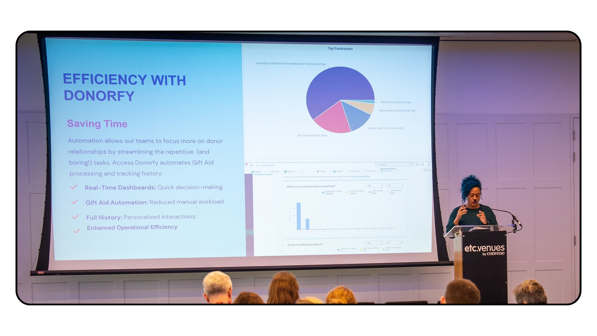
Speaking at Donorfest 2026, Helen McCartan of Caring in Bristol described the challenge of handling thousands of Christmas donations without losing accuracy or speed, while still keeping each supporter's journey personal.
Part of their approach is to automate the repetitive tasks, freeing time to spend more time on relationships. With that being said, it's also worth deciding which jobs your software can take off your plate before December!
Quick win: set up a "First gift: Christmas 2026" tag in your CRM today, so every new donor is easy to find come January.
How should we thank a first-time donor?
Ideally within 48 hours, and in a way that sounds like it came from a real person.
The thank-you is where donor stewardship really begins, and it does two jobs at once! Being quick reassures a new donor that their gift arrived safely. Being warm shows them it genuinely mattered.
With Christmas donors, it helps to think of the thank-you in three layers:
- Straight away: send an automated email, but write it the way a person would. Confirm the gift and mention one specific thing it'll help with.
- Within 48 hours: add something personal. A quick call from someone on the team, or a more personalised email, goes a long way. If you can't get hold of them and resources allow, a handwritten card does the job beautifully.
- Over the holidays: if your office closes, let donors know. Something as simple as "we'll be in touch in the new year with news" is far better than silence.
And let the thank-you just be a thank-you. It's tempting to slip in a second ask, a newsletter sign-up or a list of other ways to help, but that can all wait. For now, you simply want them to feel appreciated.
Quick win: ask a few trustees if they'll make a few thank-you calls each to select Christmas donors. It takes an evening, and donors tend to remember it.
Relevant reading: eight ways to say thank you to your donors
How do we show new donors their impact?
Tell them a story with an ending, and make sure they can see their part in it.
In her Donorfest talk, Helen also shared how her team uses a "character, conflict, resolution" structure, so each gift connects to a clear outcome. They've also found that video makes people more likely to give. Both work brilliantly in a first impact update:
- Character: one person, place or project their gift helped
- Conflict: what they were up against at Christmas
- Resolution: what changed, and how the donor played a part
A few things that help:
- Be specific: "Your gift helped serve 300 Christmas dinners" lands far better than "your support makes a real difference".
- Match the update to the gift: If someone gave to your winter shelter appeal, tell them about the shelter rather than everything you've done this year.
- Keep it short: A photo and a few sentences is plenty, or a 60-second video filmed on your phone.
Want some impact reporting inspiration? Den Danske Naturfond, a Danish nature conservation charity, built Min Natur: an online space, underpinned by Donorfy, where monthly donors can log in and see how many square metres of land their giving has helped protect, and where it is on the map. Supporters even "level up" from acorn to forest the longer they give. At the time we chatted with them, around 36% of the charity's 9,000 monthly donors use it. It really is incredible.
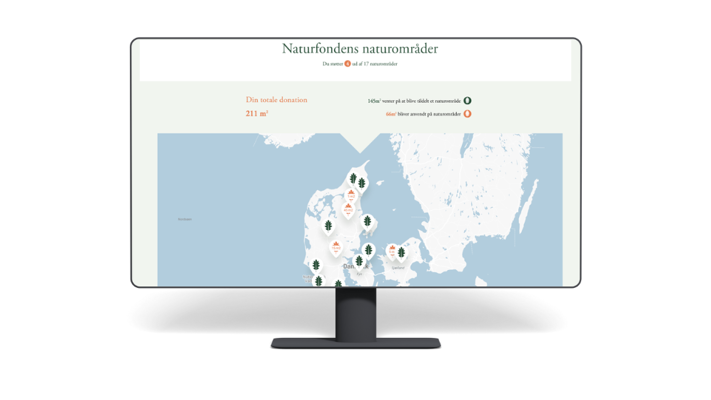
As CRM Manager and Fundraiser Jonas Arboe Harild explains:
"Fundraisers always dream about showing impact for the donors, and Donorfy has made this dream a reality for us"
What does a good donor journey look like in the first 90 days?
Think of it as a warm welcome!
You won't be the only one giving this some thought, too. In Enthuse's Charity Pulse Survey 2026, 36% of UK charities said they were looking into personalising donor journeys.
Here's a simple shape you can adapt:
| When | What | Why it matters |
|---|---|---|
| Day 0 | Automated thank-you email | Confirms the gift landed |
| Days 1 to 2 | Personal thank-you: a call or a card | Shows a real person noticed |
| Weeks 2 to 3 | Welcome message: who you are, what to expect, how often you'll be in touch | Sets expectations and builds trust |
| Weeks 4 to 6 | Impact update about their gift | Answers "did it make a difference? |
| Weeks 6 to 9 | A no-ask touchpoint: a short survey asking why they gave, a behind-the-scenes look, an invitation to an event | Deepens the connection without asking for money |
| Weeks 10 to 13 | A second, tailored ask | Arrives once trust is in place |
Automation can absolutely help here, too. Acorns Children's Hospice uses email triggers in Donorfy to run a warm welcome journey for new regular givers, so they feel valued from day one.
Quick win: add one email with no ask at all, just a simple "What made you give?" The replies are lovely to read, and they'll tell you exactly what to say next time.
When should we ask for a second gift?
Once you've thanked them and shown them what their first gift did.
For most December donors, that brings you to late February or March, which often fits rather nicely with a spring appeal.
When you do ask, it pays to make the second gift feel like the natural next chapter. This can be the moment a donor starts to become a supporter ...
- Connect it to the first gift. "Last Christmas you helped keep the shelter open. This spring, you could help..."
- Tailor the amount. Base the ask on what they gave, rather than picking one figure for everyone. Acorns Children's Hospice did just that, tailoring ask amounts to each donor's giving history, and saw a newsletter campaign bring in 109% more income than projected.
- Offer a regular option. Some first-time donors would happily give a little each month if you asked, and regular givers tend to stick around for longer.
Quick win: mention what they gave last time. "Last Christmas you gave £25..." makes the ask feel personal, and gives them a natural amount to match or nudge up.
How else can new donors become supporters?
As you'll likely already know, not everyone shows their support with money.
Some of the most loyal people around a charity give in other ways; this is where a donor journey becomes more of a supporter journey.
A few other second steps worth offering:
- Volunteering. Christmas donors often care about the very thing your volunteers do, so an invitation to help out can feel like a natural next step.
- Fundraising for you. A sponsored challenge or a birthday fundraiser turns one supporter into a whole network.
- Coming along to something. A tour, an open day or a thank-you event lets them see your work up close.
- Sharing their story. Ask why they gave and, with their permission, feature their words on your website or social channels.
- Speaking up. Signing a petition or sharing a campaign can matter just as much as a donation.
Ideally, match the invitation to what you know about them. Someone who gave in memory of a loved one might welcome a remembrance event, while someone who came through a friend's fundraising page might fancy having a go themselves.
"If you only track one number next March, make it second-gift rate. It tells you whether your Christmas donors are becoming supporters, while there's still time to do something about it."
How do we measure second-gift rate?
Second-gift rate is simply the percentage of first-time donors who go on to give again.
It's a quick, telling way to see whether your welcome is working. You calculate it by:
Second-gift rate = (first-time donors who gave again ÷ all first-time donors in the group) × 100
For the visual learners among us:
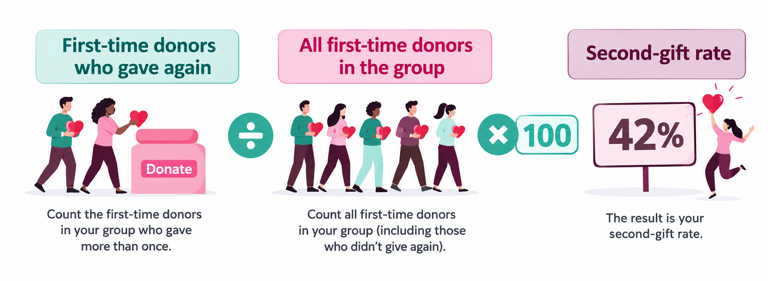
Say 200 people gave to you for the first time in December, and 30 of them have given again by the end of March. That's a 90-day second-gift rate of 15%.
A few tips to keep the number meaningful:
- Measure a defined group. Track December's first-time donors as their own cohort, rather than mixing them with everyone who gave this year.
- Use two windows. Many second gifts arrive after the first 90 days, so treat the 90-day rate as an early signal and the 12-month rate as the real test.
- Split by source. Compare donors who came from your appeal, an event or a friend's fundraising page. It shows where the welcome is landing and where it needs work.
And don't stop at gifts. It's worth tracking a "second action" rate too: the share of new donors who take any meaningful next step, from a second gift to signing up to volunteer or fundraise. It gives you a fuller picture of how many donors are becoming supporters.
As for what "good" looks like, the benchmark that matters most is your own from last year. Your cause, size and audience shape your numbers far more than anyone else's. And small gains add up fast: if 15 in every 100 December donors currently give again, getting that to 20 means a third more second gifts.
Five quick ways to lift your second-gift rate:
- Say thank you within 48 hours. Quick and personal beats slow and polished.
- Show impact before you ask. Let them see what their first gift did first.
- Make the second ask specific. A clear project and amount is easier to say yes to than a general appeal.
- Offer a monthly option. Some donors would rather give a little, regularly.
- Follow up once, differently. If someone opened your appeal but didn't give, try another channel, like a short call or a card.
Set yourself a realistic goal (a few percentage points above last year is a great start) and check your 90-day rate at the end of March to see how you're getting on!
Ready to go back for seconds?
A December donor's first gift is the start of a supporter journey that can last well beyond Christmas.
Thank them quickly, show them what they made possible, give the relationship room to grow, then invite them to take their next step with confidence. Some will give again, some might volunteer, and some might even run a marathon in your name.
All of them are supporters, and good supporter stewardship keeps those relationships growing for years to come. As Caring in Bristol said at Donorfest, sustainable growth comes from "balancing personal connections with efficient systems".
That balance is much easier when your supporter data does some of the heavy lifting.
If you'd like to see how Donorfy can help you tag new donors, automate thank-yous and keep an eye on your second-gift rate, get in touch – we'd love to hear about your plans for Christmas and beyond!
Already using Donorfy? The Customer Success team can help you put any of the ideas in this guide into practice.
FAQs
What is donor stewardship?
Simply put, donor stewardship is everything a charity does after a gift to help a donor feel valued: thanking them, showing them what their gift did and keeping them involved. Done well, it's generally what turns a one-off donation into a lasting relationship.
What's the difference between a donor journey and a supporter journey?
A donor journey usually describes the steps around giving: the first gift, the thank-you, the impact update and the next ask.
A supporter journey is the bigger picture, covering every way someone gets involved with your charity over time, from giving and volunteering to fundraising and campaigning.
How do you map a charity supporter journey?
Start with one group, such as first-time Christmas donors, and write down every touchpoint they have with you, in order.
Note what each message is for, when it goes out and how you'll know it's working. Even a simple charity supporter journey map like this quickly shows up gaps, such as long silences or asks that arrive too soon.
What is supporter stewardship?
Supporter stewardship is the longer-term version of donor stewardship. It's about looking after people as their relationship with you grows, whether they're giving monthly, volunteering or fundraising on your behalf.
How can a CRM support donor stewardship?
A good CRM brings everything in this guide into one place. It can tag new donors by source, keep track of permissions and Gift Aid, automate your thank-yous and welcome journey, and report on your second-gift rate, so less slips through the cracks in a busy January!
If you already use a CRM, your supplier's support team is the best place to start: ask them how to set up the steps in this guide.
If you'd like to see how Donorfy can help, you can:
- Talk to the Donorfy team
- Start a free trial
- Download the brochure
