AU & NZ
 SG
SG
 MY
MY
 US
US
 IE
IE

 Access Assemble
Why the challenges of managing volunteers are growing (and what charities can do about it)
From finance to fundraising, campaigning to communications, volunteers are a lifeline in the face of economic instability, spending cuts and increased pressure on services.
That's why recent research paints a concerning picture: Charities UK-wide anticipate a shortfall of 3m volunteers in 2026. It makes for difficult reading when many volunteer management teams already face increasing challenges.
In this article, we'll unpack some of the issues, their impact on volunteer management and how to turn them into opportunities.

What's behind the rising challenges of managing volunteers?
Before we look at some of the challenges trying to trip you up, let's get honest. As rewarding as it is, managing volunteers can be tough going.
Volunteer management teams are shrinking, demand for services is skyrocketing and there's an urgent need for more volunteers. Recruitment budgets are frozen or non-existent. And everyone is trying to do more with less. You’re in the middle of a perfect storm.
More stringent regulatory demands
Keeping on top of the day-to-day is difficult enough for stretched teams. Now, greater scrutiny from regulators and funders has pushed compliance and safeguarding up the agenda.
It's an onerous responsibility that comes with a hefty admin burden and time commitment. Yet non-compliance puts funding, public trust and beneficiaries at risk.
There's no argument that safeguarding is vital, especially given the rise in remote volunteering. But the reality is onboarding delays and more formal volunteering practices that could frustrate and disengage the new generation of volunteers.
Take a free volunteer compliance risk assessment
Changing volunteer experience
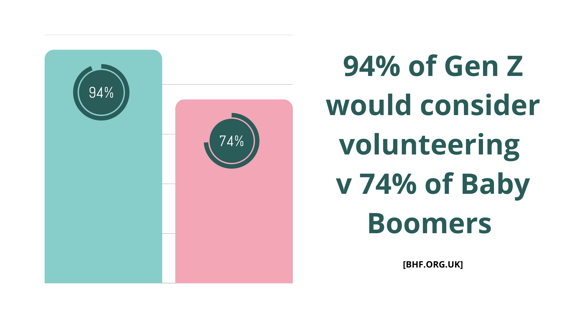 Gen Z (aged 16-24) are more likely to want to lend a hand than any other generation. It's an opportunity for charities, but it doesn't come without its volunteer management issues.
Right now, roles, processes and systems are mostly built around the needs of traditional volunteers: regular hours, face-to-face roles and long-term commitment. Gen Z wants something different.
- Flexibility
Volunteering that fits around work, study and wellbeing habits. Think microtasks and shorter commitments, remote and hybrid roles.
- Digital first experience
From online onboarding to in-app messaging and SMS, Gen Z is all about harnessing tech for ease, speed and efficiency.
- Opportunities for growth
Roles that build confidence, new skills and job prospects are high on the agenda.
- Good experience
Gen Z is less tolerant of a poor experience than traditional volunteers. Speedy onboarding, roles that match their motivation and communication in a way that works best for them are often dealbreakers.
More demand, fewer volunteers
Fewer volunteers and more charities reliant on them mean organisations are drawing from the same, limited pool. A volunteering experience that people want is crucial if you're to compete for their time, skills and loyalty.
"164m additional volunteering hours could be unlocked each month if more flexible, digital opportunities were available" - Royal Voluntary Service
But what do these volunteer management issues really mean?
Burnout is rising
It's no secret that volunteer management is generally under-resourced. Juggling day-to-day tasks, running recruitment campaigns and developing retention programmes, often using antiquated systems, takes its toll. While confidence and morale take a hit every time volunteers' expectations aren't met.
A (costly) revolving door of volunteers
A mismatch between expectations and reality leads volunteers to quit soon after starting. Churn costs money, wastes time and drains already-stretched volunteer management teams. The pressure piles on frontline and back-of-house staff too, as they rally to fill gaps.
Missed chances to make more of a difference
Ultimately, it'll be those who rely on the charity's support who'll feel it most. Whichever way we look at it, there's more to do with the same or fewer staff and volunteer resources. And it has repercussions beyond the organisation's walls.
Yet there's one thing that never changes in our sector: Our resilience. We spot opportunities and we adapt.
See how much your charity can do with Access Assemble
The challenges of managing volunteers: what can you do to turn it around?
“We wouldn’t be where we are today without our volunteers."
- Wendy Halley, Volunteering Programme Manager, Save the Children
The landscape is shifting, but with change comes possibility. Charities that adapt how they attract, onboard and support volunteers will be the ones who unlock new capacity, reach new audiences and build more resilient programmes.
Put volunteer experience front and centre
It's a non-negotiable for a new generation of volunteers who value flexibility and experiences that align with their career goals and digital-first lifestyle.
From in-app onboarding to light-touch commitment. Flexible remote roles, micro-volunteering and upskilling opportunities. And the all-important multi-channel communication. It's a critical shift for future-proofing your volunteer programme.
Improve your processes
Centralise volunteer data, onboarding, scheduling and communications. Automate workflow and standardise processes. Better systems cut hours of admin, eliminate manual tasks and free up time. Spoiler: volunteer management software is great for this.
Use data smarter
Information such as motivation, skills, preferences, training status and safeguarding checks, all in one place, means managers can connect volunteers with opportunities that suit them. The same data simplifies compliance reporting.
Take advantage of digital tools
Digital onboarding, automated checks, training prompts and self-serve inductions. The best digital tools reduce friction for everyone. They empower volunteers to self-manage and, with instant communication all in one place, everyone stays connected.
From struggling to keep up to scaling up with ease: How Mencap unlocked capacity
"We couldn't imagine our lives without it now. It's created capacity we never had before and that's making a real difference for the people we support." Matt Hatt, Volunteering Services Manager at Mencap
In just one year, Mencap saw a 71% increase in volunteers. And Volunteering Services Manager, Matt Hatt, puts it down to one thing.
"Access Assemble has saved us serious time and helped us better understand who our volunteers are and what they need. It's intuitive, supportive, and has become essential to how we work."
By improving processes and empowering teams, Assemble has allowed Matt and his colleagues to stop plate-spinning and think strategically about the experience their volunteers deserve.
With the tools to shape a volunteer experience that feels connected, inclusive and supportive, the team has strengthened and expanded their community-led volunteering programme. And Matt feels confident their growth is sustainable.
"We've focused on getting the basics right. But we're excited to go further. Assemble gives us what we need to keep improving, and that's the real power of it."
Where to go from here
Volunteers are strategically important to most charities' missions, but volunteer management comes with its issues. However, those same challenges present opportunities to buck the trend for your organisation.
The charities that invest in systems and processes better suited to the shifting volunteering landscape will be the ones with the capacity and insight to meet rising expectations.
If you're ready to empower volunteers, simplify your system and lighten the load for everyone, it's worth exploring to see how Access Assemble can help you recruit, manage and retain volunteers - without burning out.