AU & NZ
 SG
SG
 MY
MY
 US
US
 IE
IE
 Access Charity Ad Grants
Google Ad Grants for nonprofits requirements: no-nonsense guide for UK charities
If you’ve heard about Google’s $10,000-a-month Ad Grant but aren’t totally sure what the requirements are, or whether your charity will actually qualify, you’re in the right place.
This guide walks you through the Google Ad Grant requirements, in plain English, and explains what they actually mean in practice. No jargon. No guessing. Just the stuff UK charities really need to know to decide if it’s worth applying.

First, why do charities need Google Ad Grants in the first place?
If your charity sometimes feels behind on digital fundraising, you’re not alone.
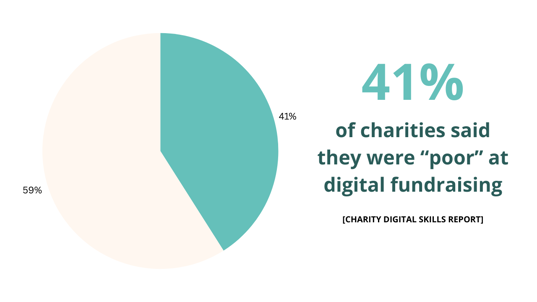 According to the 2024 Charity Digital Skills Report, 41% of UK charities rate themselves as “poor” at digital fundraising, and one in four don’t fundraise digitally at all.
Though, on the flip side, more than half of charities (52%) identified increasing digital fundraising as a priority for 2025. Why? Many reasons, including that closing this visibility gap is important - especially in a world where supporters, service users and volunteers increasingly start their journey with a Google search.
This is where Google Ad Grants comes into its own. Charities that meet Google Ad grant requirements can get up to $10,000 a month in free search advertising, so they can:
- be found by people who need support,
- compete with larger organisations, and
- promote services and campaigns without extra budget pressure.
And the best part? You don’t need to be a digital expert to get started, you just need to check you meet Google Ad Grants for nonprofits requirements.
Before you apply: what Google needs to see
Think of the application process as Google doing a quick “Are you a real charity, and can we trust your website?” check.
You’ll need to be a registered charity
Google is strict on this one. If you’re registered with the Charity Commission (or OSCR/CCNI), you’re on solid ground. CICs and community groups sometimes ask if they can apply, but unless they also hold charity status, the answer is usually no.
You’ll also need to enrol in Google for Nonprofits
This is Google’s gateway for good causes. You verify your organisation through TechSoup, Google reviews it, and once you’re approved, you get access to tools like Google Workspace, YouTube for Nonprofits and, most importantly, Ad Grants.
And yes, Google will check your website
This is where some UK charities get caught out. Google wants to see a website that loads quickly, works well on mobile, and explains clearly what you do and why. They also expect to see things like up-to-date policies and accessible content.
If your website is a bit “pre-pandemic”, a quick refresh before applying can save a lot of frustration.
Some organisations aren’t eligible at all
This includes government bodies, hospitals, schools, universities and political organisations. If your charity sits next to one of those worlds, for example, you support hospital patients but you’re not a hospital yourself, you may still qualify. It’s all about your charitable status, not who you work with.
After you’re approved: the rules you need to keep following
This is the part nobody mentions during the shiny “$10,000 free ads!” moment. Getting the grant is one thing. Keeping it is another.
- Google’s compliance requirements aren’t unreasonable
- but they do require a little consistency. - Maintain a minimum 5% click-through rate (CTR).
Sounds big, but if you target the right search terms and update campaigns occasionally, it’s absolutely achievable. - Avoid single-word keywords.
Broad terms like “donate” or “volunteer” won’t fly - go for more specific, intent-based phrases. - Set up conversion tracking.
A “conversion” can be a volunteer enquiry, a newsletter signup, or a resource download - what matters is tracking meaningful engagement. - Use geo-targeting.
Whether you serve the whole UK or a local area, target your ads accordingly. - Give your account some monthly love.
Refresh ad copy, remove underperforming keywords, update landing pages - a bit of upkeep keeps everything running smoothly. - Keep your website compliant.
Slow loading times or outdated content can trigger a suspension — so make sure your site stays healthy.
So, is Google Ad Grants worth it for charities then?
In most cases, yes, and in a big way! If you provide services, recruit volunteers, share advice or run campaigns, the grant can help you reach people who otherwise wouldn’t find you.
But it’s not a “set it and forget it” programme. It works best when someone can keep an eye on the account and make small tweaks regularly.
If you don’t have the time or expertise (or simply don’t want the ongoing admin) many charities choose professional ad grant management instead.

Gather as much information as you can. Here's a detailed, definitive Guide to Google Ad Grants
Get your charity's message heard
Why many charities choose professional management (and why it might work for you)
Your Google Ad Grant is like a garden: it needs nurturing. That’s where a managed service can make all the difference.
- Better performance, every time.
With expert campaign setup and optimisation, a managed service makes your $10,000 go further - whether you’re recruiting volunteers, promoting services, or raising awareness. - No compliance headaches.
CTRs, keyword rules, tracking, monthly maintenance, all quietly taken care of, so you avoid the risk of suspension. - More time for doing good.
You stay focused on your mission, while experts handle the ads. - Smarter targeting and sharper insights.
Managed campaigns bring data-driven improvements that many busy charities would never have time to find. - Built around your goals.
Whether you’re aiming for sign-ups, downloads, service users, or visibility — a managed service aligns the grant with what matters.
What does that look like in practice?
Kicks Count are a great example. They're a charity that uses the Access managed Google Ad Grant service to reach more of the right people and boost engagement.
Before working with Access, the team struggled to maximise their online visibility due to limited digital advertising resources and, like many small charities, not enough people on the team to prioritise it.
“We simply could not reach people and create the impact we do without the awareness generated by these Ad Grants.” – Elizabeth Hutton OBE
Here's more from Elizabeth:
Want a quick way to check if you can apply for Google Ad Grant?
It only takes a minute! check your eligibility.