AU & NZ
 SG
SG
 MY
MY
 US
US
 IE
IE


Guest satisfaction is what puts your hotel in the spotlight and can be the deciding factor for guests coming back. It shapes your brand and reputation, so if you have the proof to show it, then guests will want to come back for more.
The challenge is that guest expectations have risen recently, as according to the Shiji Guest Experience Benchmark, the global Guest Review Index hit a record high of 86.9%. This means guests are measuring their hotel stay against a rapidly rising hotel standard, so keeping this number up will depend on maintaining effortless operations and exceptional guest experiences.
This article will guide you through what guest satisfaction is and the best ways to measure it while recognizing the areas to improve it in your day-to-day operations. With easy, applicable steps and hotel technology designed to improve hotel guest satisfaction, we will help you get started in delivering guest experiences that result in 5-star reviews.
So, what is guest satisfaction and why should you care?
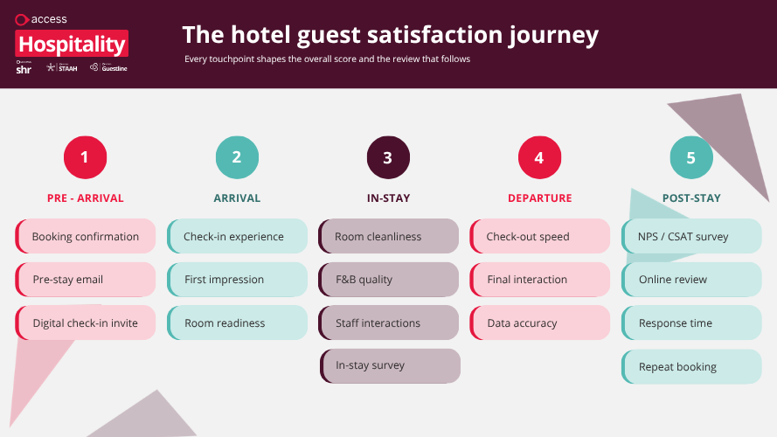
Guest satisfaction can be described as the gap between expectation and reality of what your guests experienced. From the moment their booking confirmation arrives in your inbox all the way to them handing the room keys back, it’s how every step influenced their hotel stay. And it’s their opinion that will serve as a guide to future guests who come across your hotel website to make their final decision.
It’s these reviews that improve your profits, as 81% of travellers say they always read reviews before booking a hotel, with particular attention paid to how hotels respond to guest feedback. Gaining higher reviews from satisfied guests is where the opportunity lies in boosting your profitability and it doesn’t take much to achieve this. Guest satisfaction isn’t another small measure of success to fall back on, but it’s a metric that separates the competition.
5 things that guests care about and why they make or break a hotel stay
Understanding the factors that drive guest satisfaction is the first step in improving it for your hotel. If we assume the trends or search intent that guests are looking for, then this doesn’t accurately target the current demand. Here are 5 easy ways to see what guests now expect during a hotel stay, and if these are areas you can focus on.
1. Cleanliness and room conditions make all the difference
This is one of the top drivers for guest satisfaction scores, as according to TrustYou’s EMEA data, room cleanliness and maintenance are the biggest factors that cause a negative impression. Room maintenance drags scores down by up to 6.9 points, so ensuring housekeeping teams are supported is essential to keep these scores up.
2. Staff friendliness and service speed deliver consistent service
When you’re understaffed, guests will notice as pressure rises and service becomes slow. Further to the TrustYou report, great service is one of the biggest positive drivers for excellent hotel scores, contributing to 8.31 points to an overall hotel rating. When staffing levels are monitored well, teams can work efficiently and deliver exceptional guest experiences.
3. Check-in and check-out experiences without the frustration
Long queues and wait times are not what guests expect when they arrive and can lead to frustration before getting to their room. Digital check-in kiosks and self-service is what guests look for as it’s on their own terms. Our own records show that 2.3 million online check-ins were completed through our check-in software, showing that this is a sought-after process that guests prefer.
4. Food and beverage quality that leaves guests wanting more
If you have a restaurant or bar in your hotel, then this is where guest experiences will be impacted. Reviews often feature pictures of food and drink, so cold food or slow service can be the downfall of guest satisfaction. Ensuring it’s always to the best standard is essential and will determine whether guests might return.
5. Ensure guests get their value for money
This doesn’t mean being the cheapest option available, but going the extra mile to make guests feel special. 61% of consumers are willing to spend more with a hotel that offers a personalized experience according to Medallia, so small incentives like a complimentary drink or a free meal will go a long way. Transparent pricing will reassure guests who often feel caught out by unexpected charges at the checkout. Make sure your rates, extras and cancellation terms are clearly communicated from the point of booking.
How to measure guest satisfaction without the spreadsheet confusion
Measuring the success of guest satisfaction means choosing the right method for each stage of the guest journey, rather than sending them multiple surveys once they leave. Here’s how you can successfully build a plan to measure what’s working and where you can improve for future guest stays.
Catching problems before they become reviews
Sending a quick survey to guests during their stay gives you the opportunity to discover issues before they become a bigger problem. Keep it clear and simple, no more than 3 questions with a comment box for additional context. A good starting question would be, ‘on a scale of 1 to 5, how satisfied are you with your stay so far?’ Asked at the right time, this can give you the clarity needed to fix any concerns.
Asking the right questions after their stay
A Net Promoter Score, or NPS, asks guests how likely they would recommend your hotel on a scale from 0 to 10. This is one of the simplest ways to see where guest loyalty lies and where guest satisfaction is increasing or needs improvement. Research from Customer Alliance shows that 81.8% of satisfied guests plan to return, making post-stay survey data important for future profits.
The reviews are already out there but are you keeping up?
Google holds 43% of global review market share, while Booking.com claims around 30%, but between them, they are the primary way where guests see and judge your hotel reputation. Average response times to reviews have dropped from 14 days to just 3 days which has been influenced by AI tools, so monitoring and responding to reviews is no longer an optional admin task as it’s a driver for repeat bookings.
What your team hears every day matters too
Stay alert on what people are saying about your hotel and how their experiences have been, especially on social channels. Ensure teams know the right approach when replying to online comments or reviews and might even have extra points to add while conversing with guests during their stay.
6 things you can do right now to start improving your guest satisfaction
1. Nail the basics and get cleanliness right every time
Cleanliness is the driver to make a good review a great one, as guests don’t want to start their stay without dirty mishaps. If staffing is low or service gets busy, these standards may slip and guests will start to notice. A practical way to get on top of this is by using a digital housekeeping checklist so teams work to a consistent standard no matter who is on shift. It enables them to meet deadlines and not cut corners even during the busier periods. Getting this right at the beginning will help teams stay aligned and get rooms ready to a higher level.
2. Give your team the confidence to fix problems on the spot
Ensure your teams are confident to resolve issues without the need to escalate it to higher management. When a problem is handled well and with a quick fix, this deters the issue from getting out of control. Brief teams with a simple service recovery plan so they know what to offer and when to diffuse any tension. This shows guests that they are being listened to and not passed around to different people.
3. Make arrival and checkout as painless as possible
More than almost half of travellers now prefer technology over the traditional reception desk and queuing still remains a big challenge for hotels to combat. Try using pre-arrival messaging that invites guests to complete a digital check-in to reduce desk pressure at busy times. This sets a positive tone before guests even walk through the door and prepares them for a smooth, well-prepared stay.
4. Make guests feel known without overcomplicating it
You don’t need an elaborate loyalty programme to make guests feel known or appreciated. Use the data you already have like past stay comments, dietary preferences or room type choices to make small but meaningful changes that can influence their stay. A welcome message that references a previous visit or a room set up to reflect a guest's preferences costs almost nothing but gives you many rewards.
5. Respond to all reviews promptly and professionally
When someone has a bad experience, the worst thing to do is retaliate as this is visible to everyone online. A brief and personal reply to a negative review demonstrates care and professionalism while meaningfully demonstrating how you handle difficult situations to prospective guests. As the average response times have dropped to just 3 days, a slow or no response is not an option even with tricky reviewers.
6. Happy teams make happy guests
Guests are important, but your teams need to be supported to deliver the best experiences. If they are overstretched or working long hours, it will show in service quality no matter how good your reviews have been. Ensure teams are briefed regularly to see if changes need to be made to their schedule and that they are happy with the tasks assigned. If teams work harmoniously together, then this will positively impact your guest satisfaction and scores.
What hotel technology is worth investing in and how it makes a difference
Technology should make it easier for your operation and teams to deliver consistent service and not add more confusion. Here are the tools that are making a real difference for hoteliers right now.
A PMS that knows your guests
A hotel PMS that allows your team to see guest data and feedback all in one place will support them delivering a personalised experience that drives repeat stays. Finding the right PMS that aligns to your operational needs is important so guest data can flow into other systems like your booking engine and payments to create less admin work for your teams.
Free up your front desk with guest communications and self-service
Research from Hotel Tech Report shows that 70% of guests find chatbots genuinely helpful for simple requests like Wi-Fi codes and local recommendations. Automated messaging and self-service tools free up your front desk staff so they can have better guest engagement. This gives guests the sense of control over their stay that drives satisfaction upwards and takes away manual admin from your team.
Survey tools that surface trends before they become problems
Automated post-stay survey tools that feed the results into a dashboard saves time and makes it much easier to identify trends and demand. The real value of this data comes when those tools are integrated with your PMS so guest feedback doesn’t get forgotten and instead highlights the full guest journey for you to act on.
Efficient staffing that drives guest satisfaction in the background
Under-staffing is one of the top challenges in hospitality, as 57% agree that this directly impacts the service that guests receive, according to Hospitality Action’s report. Staff scheduling tools help you match team sizes to actual demand, so your busy check-in periods or breakfast services are properly covered. The result is not just happier staff but more consistent service and stronger satisfaction scores.
Genuine guest satisfaction is simpler than you think
Guest satisfaction is earned through your delivery of service and how you shape their experience. Hotels that score well in reviews and keep guests coming back are the ones that measure the metrics carefully, act on feedback quickly and give their teams the tools and support to do their jobs well.
Guest satisfaction is earned through your delivery of service and how you shape their experience. Hotels that score well in reviews and keep guests coming back are the ones that measure the metrics carefully, act on feedback quickly and give their teams the tools and support to do their jobs well.