AU & NZ
 SG
SG
 MY
MY
 US
US
 IE
IE


Agentic AI changes that dynamic. It can observe what is happening in your business, decide what needs to be done and act without waiting for manual prompts. This is a significant shift from the dashboards and rule-based automations operators are used to.
In this guide, we’ll explore how agentic AI for hospitality is already working for hotels, restaurants, pubs and leisure venues across the UK; the real use cases, what it means for daily operations and how to get started without disrupting what you already have.
What is agentic AI and why does it matter in hospitality?
Traditional hospitality technology reports what has already happened. Agentic AI goes further. It can:
-
Observe what's happening in real time
-
Decide what needs to be done
-
Act without waiting for a manual trigger
This shift moves operators beyond dashboards and rigid rules. It gives teams practical, day‑to‑day support that adapts to changing circumstances.
Imagine a system that notices stock running low, checks upcoming covers and prompts a reorder before the chef discovers the issue. Or one that spots an unusual spike in Saturday lunch bookings, checks the rota and alerts the manager to a staffing gap before service starts.
“AI works seamlessly in the background… improving guest experience while predicting issues and driving staffing decisions.”
Martin Verdon Roe, GM Front of House, Access Hospitality
How agentic AI works in a hospitality environment
Agentic AI uses a simple cycle of observe, decide and act. It reads data from the systems you already rely on such as EPoS, bookings, scheduling and procurement. It then makes decisions and carries out tasks automatically.
For example, if an AI agent spots an unusually high number of Saturday lunch bookings, it checks the rota, identifies staffing gaps and alerts the manager with a recommended action.
What makes it different from traditional automation?
Rule based automation follows a fixed script and breaks when something unexpected happens. Agentic AI adapts, learns from patterns and handles the complexity of multi outlet environments where the situation may shift by the hour.
Why agentic AI is becoming essential for hotels, restaurants and pubs
Every hospitality operator shares three major pressure points:
-
Labour - the biggest cost and the hardest to optimise
-
Admin - repetitive, time‑consuming tasks every shift
-
Guest experience - expectations rising faster than staffing levels
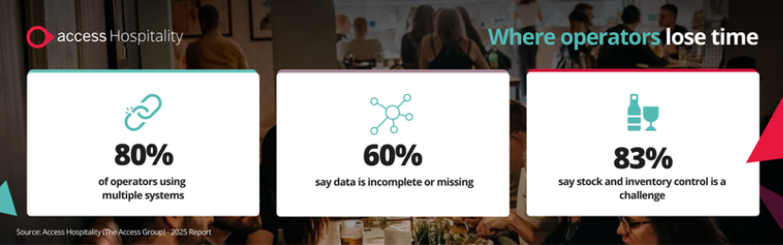
Research shows that 31% of operators feel they’re not using their tech to its full potential, and 60% say their data is incomplete or missing.
Agentic AI bridges these gaps by turning fragmented data into practical, real‑time decisions that support staff and improve the guest journey.
How agentic AI improves guest experience at scale
Personalisation has historically been difficult because it depends on memory, attention and time which are all scarce resources during busy service.
Agentic AI makes it manageable by:
-
Surfacing guest preferences
-
Highlighting upsell opportunities
-
Reducing wait times through dynamic staffing
-
Sending pre‑stay and post‑visit messages
-
Supporting tailored arrival and dining experiences
"AI isn't hype, it is the only way to deliver faster, more personal, more consistent service with the teams you already have.”
Martin Verdon Roe, GM Front of House, Access Hospitality
How agentic AI reduces admin and supports teams
When staff are buried in repetitive tasks, the guest experience suffers. Agentic AI helps by automating:
-
Booking confirmations
-
Prep lists
-
Stock chasing
-
Supplier updates
-
Shift reminders and availability checks
“AI handles the repetitive stuff so teams can focus on keeping customers happy and running a tight operation.”
Jules Hailstone, Director of Product Marketing, Access Hospitality
Access research shows 38% of operators expect AI to help with routine tasks and reporting, directly aligning with these daily pressures.
Practical use cases: Where agentic AI delivers value
Agentic AI provides value across all areas of hospitality from hotels to pubs, bars and restaurants.
For food & beverage operators
Where AI earns its place in an F&B operation:
-
Real‑time booking and capacity insights
-
Automated guest messaging
-
Predicting queue patterns and service bottlenecks
-
Contextual upsell prompts
-
Guest feedback routing
-
Inventory monitoring and reorder prompts
-
Supplier price change alerts
-
Allergen and recipe data checks
-
Waste prediction based on trends
-
For hotel operators
For hotel operators, agentic AI helps with:
-
Housekeeping route prioritisation
-
Live room‑readiness updates for FOH
-
Predictive maintenance
-
Lost property workflow automation
3 proven ways AI agents save time and money
1. Reducing labour pressure during peak periods
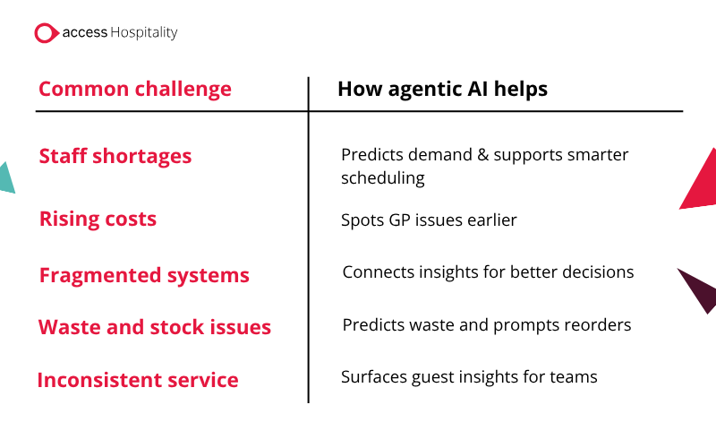
AI predicts demand using booking patterns, EPoS data and recent trading so managers can plan rotas earlier and more accurately. Automated shift reminders and cover requests further reduce admin load.
2. Improving gross profit (GP) through tighter stock and menu control
Access research shows 83% of operators struggle with stock and inventory control. From gradual supplier price increases to rising waste, most GP issues creep in quietly, often over weeks before anyone notices.
An AI agent connected to your procurement data spots these patterns as they emerge. It flags a supplier price change the day it happens, not at month-end review. It identifies which menu items are driving waste before the next order goes in. That is the difference between reacting to a GP problem and preventing one.
3. Minimising compliance risk for allergens and food safety
Manual allergen checking is time consuming and prone to human error. Agentic AI cross checks recipes, flags issues instantly and supports FSA guidance.
How agentic AI fits into your existing hospitality tech
Many operators believe their fragmented systems are a barrier to AI adoption. And they’re right, 47% use two to four systems, while 25% use five or more.
“Fragmented systems that don’t speak to each other are one of the biggest challenges. Integration doesn’t have to be complex when you invest in the right platform.”
Martin Verdon Roe, GM Front of House, Access Hospitality
A connected platform such as Access Evo brings your operational data together, giving AI the context it needs to act reliably. Evo Navigator is where agentic AI in hospitality stops being a concept and starts being something your operation actually runs on.
How to get started with agentic AI
You don’t need a major transformation to benefit from AI. Start small and build confidence:
1. Identify the tasks that drain the most time
Look for repetitive, admin‑heavy tasks such as booking confirmations, stock checks, rota updates or allergen reviews.
2. Map where relevant data already lives
Most of the information AI needs is already in your systems, bookings, EPoS, rotas, recipes, procurement. The goal is simply connecting it.
3. Start with one or two predictable workflows
Choose daily tasks that follow a consistent pattern, such as prep lists, allergen alerts or demand forecasting. These create fast wins and build confidence.
Get time back with agentic AI for hospitality operators
The operators getting the most from agentic AI right now are not the ones who ran a big transformation project. They started with one workflow, connected the data they already had and let the results make the case for what came next.
Your EPoS, your bookings platform, your rota tool; the information is already there. Agentic AI just needs to be able to read it. When it can, your managers get time back. Your teams spend less of every shift on admin. And your guests get the experience they came for.
That is not hype. That is what connected hospitality technology actually looks like.
See how other UK operators are already using agentic AI to cut admin and improve service. Visit the Access Hospitality AI Hub for guides, use cases and the latest research.