AU & NZ
 SG
SG
 MY
MY
 US
US
 IE
IE


Why does maintaining relationships with donors matter more than ever?
Because the supporters you already have are getting trickier to keep, and tougher to replace.
You've probably already seen the main takeaways from CAF's UK Giving Report 2026: 2.8 million people cancelled a regular gift in 2025, while the average donation fell from £72 to £65 and there were six million fewer donors overall.
When budgets are tight, a supporter who feels connected to your work has more reason to stick around than one who only hears from you when you need something, which is why improving donor retention is one of the most reliable ways to protect income.
There's plenty to build on, though. Charities remain the UK's most trusted institution: the below chart, taken from Enthuse's Donor Pulse Survey, shows that 75% of people reported moderate to high trust in charities, well ahead of corporations, government and the media.
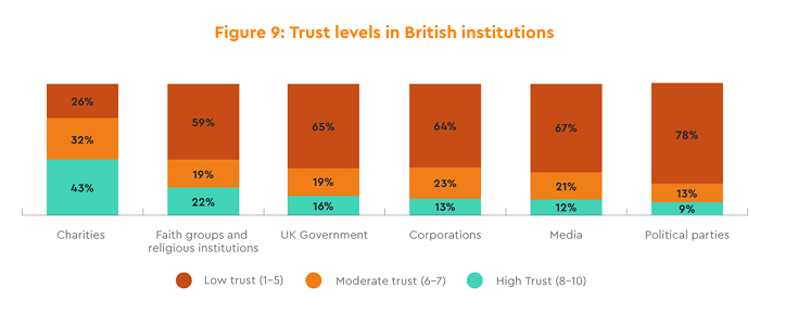
This trust is a great starting point! The challenge is keeping hold of it – and earning it – one supporter at a time.
Arguably, that trust matters even more now that soft opt-in is in force, too. While it can help your stay in touch with more supporters, it also comes with responsibilities: a clear opt-out when you collect someone's details, and in every message after that (here's the ICO guidance). Handled well, it really is a chance to show supporters you respect their choices.
What do donors expect?
Donors probably haven’t become less generous ... but more selective. Research (and experience) consistently shows that donors stay loyal when they:
- Feel recognised as individuals
- Understand the difference their support is making
- Trust you to look after their data
- Hear from you at the right time, about the things they care about
In other words, they're looking for a relationship, not a transaction.
How do you maintain relationships with donors after the first 90 days?
It often comes down to a mix of empathy and good systems! Here's five ideas, each with a real charity showing how they do it.
1. Use what you already know about each supporter
You might know more about your supporters than you think: when they first gave, what they've supported since, whether they prefer post or email, and which parts of your work matter most to them. The trick, for some charities, can be getting that knowledge out of spreadsheets and into your messages to them.
The Archdiocese of Southwark uses tags and auto-tagging in Donorfy to group supporters by campaign history, giving pattern and channel preference. When supporters said they'd rather hear by email than by post, the team tested an email-led version of its appeal, cutting costs while respecting what people had asked for.
As Gift Aid and Supporter Care Officer Mia Gilmour puts it, the approach has "made our mailings far more specific"
Their success leads to another point, too. While a big database can feel like a world of opportunity, out-of-date information and lapsed donors always sneak in.
A smaller, cleaner set of supporters you can genuinely reach, is far more valuable. The team at Archdiocese of Southwark run a data cleanse every year, bringing in new addresses and removing people they shouldn't contact, so outreach runs more smoothly.
Try this: start a data cleanse with just one group, such as last year's event participants. Update addresses, check preferences and remove anyone you shouldn't be contacting, then build from there.
2. Make the impact tangible
Supporters are more likely to stay connected when they can picture what their hard-earned donation does. Updates don't need to be polished, but they do need to be specific, such as:
- a short story from someone your charity has helped
- news on the specific project they supported
- a behind-the-scenes look at your team's work
Kids for Kids do this brilliantly. Supporters can give towards specific items, from goats and donkeys to emergency food kits, so they know exactly what their gift becomes before they even give it. The charity's 2025 emergency appeal showed how a £25 donation could help prevent child starvation, and went on to provide Kids' Kitchen Kits to 100,848 children aged five and under. With every gift linked to a campaign in Donorfy, the team can see what's working and report back. As Fundraising and Outreach Manager Sage Lancaster says: "We've worked so hard to bring supporters through the door. Now we have the tools to truly value them, thank them properly, and keep those relationships strong."
Try this: turn one recent achievement into a "you made this happen" update.
3. Build a community, not just a mailing list
Long-term supporters often stay because they feel part of something bigger. Bringing people together, and giving them a voice, strengthens that sense of belonging. A few ways to do it:
- invite long-standing supporters to share why they give, in your newsletter or on your website
- set up a supporter panel and ask for views on new ideas
- host a thank-you gathering where supporters meet each other, not just your team
- ask for feedback, then tell people what you changed as a result
Events can be a great way in, if possible. For example, Thames Hospice connected Eventbrite to Donorfy for its Sunflower Walk, so participant details flowed straight into supporter records, and the team used them to send walkers personalised journeys. Participant numbers more than tripled to 750, and the event brought in 25 new volunteers along the way.
Try this: send a two-question survey asking supporters what they'd like to hear more about, then share what you learned.
4. Recognise loyalty and milestones
Long-term supporters can be the easiest to overlook, simply because they keep showing up. Marking milestones tells them you've noticed:
- a thank-you on the anniversary of their first gift
- a look back at everything their support has made possible so far
- a personal call or card for people who've given for many years
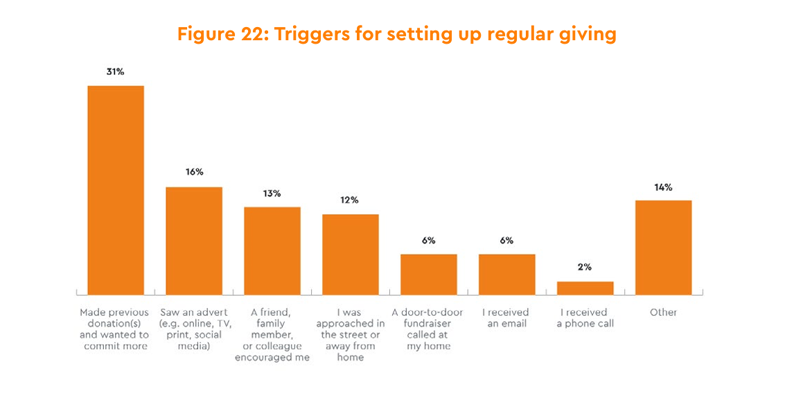
It's also a natural moment to invite one-off givers to become regular donors. The same Enthuse Donor Pulse research found that nearly a third (31%) of regular givers had already supported the charity before setting up a Direct Debit or standing order.
5. Spot the quiet ones before they drift away
Supporters don't typically announce that they're leaving! More often, they simply go quiet. Signs worth watching for include:
- emails that have stopped being opened
- a regular gift that's been cancelled or has failed
- someone who gave last year but hasn't given this year
Sport in Mind knows how easily this happens. Before Donorfy, the team juggled spreadsheets and email threads. Supporter Care Manager Aysha Naziri explained: "It was hard to track engagement or follow-ups, and opportunities to deepen relationships could be missed." Now, a central record of every supporter interaction gives the team a clear view of each relationship.
When you spot them, try reaching out with something that isn't an ask: an update, a thank-you, or a quick question about how they'd like to hear from you. It's also a good way to avoid donor fatigue, since it puts the supporter's preferences first.
Try this: run a report of everyone who gave last year but not this year, and send them a short update.
How to maintain relationships with donors: round up
In a nutshell, knowing how to maintain relationships with donors is at the heart of sustainable fundraising. It keeps supporter trust strong, eases the pressure on constant new acquisition and builds a community that should stick around for the long haul.
If you can invest in donor relationships, supported by the right data and systems, you can do more than just raise more – you can build communities that last.
You might also like: