AU & NZ
 SG
SG
 MY
MY
 US
US
 IE
IE


At Access Hospitality, we support hospitality businesses as employment law evolves, helping them adapt without losing control of labour costs or day-to-day operations through clearer processes, better data and tools built specifically for hospitality teams.
In this article, we’ll cover:
-
what’s changing for zero-hours contracts under the Employment Rights Act
-
when those changes are expected to take effect
-
and how operators can adapt their rotas and contracts with confidence.
What’s changing for zero-hours contracts after the Employment Rights Act?
From ‘’one-sided flexibility’’ to predictable hours
Under the Act, workers who regularly work certain hours over a reference period (expected to be around 12 weeks) will gain the right to be offered a guaranteed-hours contract reflecting what they actually work.
Previously, employers could keep staff on zero‑hours indefinitely even where they had effectively been working regular part‑time or full‑time patterns for months.
At the same time, workers who genuinely want casual, ad-hoc shifts should still be able to opt in, but employers will need to show that this is a real choice and that working patterns are reviewed regularly.
Advance notice and cancellation pay
Employers will be expected to give reasonable notice of shifts, rather than publishing rotas days or hours before service.
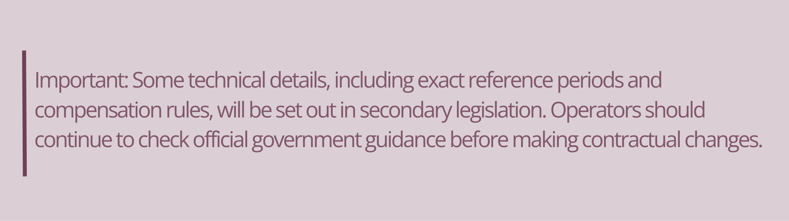
Reasonable notice is not yet defined in days or hours; regulations will set a presumed minimum, with tribunals able to look at the circumstances in each case.
Where shifts are cancelled, shortened or significantly changed at short notice, workers will be entitled to proportionate compensation, a payment linked to how late and how severe the change is. For example, a higher payment where a full shift is cancelled at very short notice up to, but not more than, the pay the worker would have received for that shift.
Zero-hours and low-hours are in scope
The reforms apply not only to true zero‑hours contracts, but also to low‑hours contracts where staff regularly work beyond their stated minimum over a reference period, closing off the use of 1-2 hour contracts for people who in reality work much more. Limited exemptions are expected for genuinely short‑term or highly flexible roles, with details to follow in regulations.
Agency workers are also expected to be covered, so where they work regular patterns for the same operator they may gain similar rights, limiting the ability to pass zero‑hours risk to third‑party providers.
What hospitality employers will need to do differently
1. Track real hours, not just contracts
Eligibility for guaranteed hours is based on actual hours worked, not what’s written in a contract.
That means pulling together rota data, time-and-attendance and payroll to understand patterns by:
-
individual
-
role
-
site
2. Offer and review guaranteed hours
At the end of each reference period, qualifying workers must be offered a guaranteed-hours contract reflecting their regular pattern.
Workers may be able to decline, but employers will need to:
-
record that decision
-
continue reviewing hours over time
3. Publish rotas earlier and define “late”
Operators will need clear internal standards, such as:
-
rotas issued in advance
-
clear definitions of what counts as a late change
-
rules for when cancellation pay applies and who can authorise it
4. Build stronger audit trails
With the Fair Work Agency and longer tribunal time limits, informal WhatsApp messages and handwritten notes will be hard to defend.
Employers will need structured records showing:
-
hours worked
-
notice given
-
compensation paid
Practical workflows: how to adapt zero-hours in hospitality
Map your zero- and low-hours population
Run a 12-week look-back across rotas and payroll to identify:
-
zero- and low-hours staff
-
average weekly hours
-
regular patterns that may trigger guaranteed-hours rights
Redesign how rotas are built
-
Move towards stable base rotas reflecting guaranteed hours
-
Layer in genuine casual shifts for peaks and events
-
Use demand trends (sales, covers, footfall) to plan earlier
Refresh contracts and policies
-
Add guaranteed-hours clauses tied to reference periods
-
Set out notice, change and cancellation-pay rules clearly
-
Make sure wording matches what managers do
Train managers on the new decision points
Managers need confidence on:
-
when to offer extra shifts
-
how to handle shortened shifts
-
how to respond to guaranteed-hours requests
Related reading: “How to Fairly Terminate Zero-Hour Contracts in the UK” (updated for 2026), which covers dismissal, notice and fair process in more detail.
How Rotaready Evo supports zero-hours and guaranteed-hours compliance
Rotaready Evo, our AI-powered hospitality scheduling software, is designed for the realities of variable-hours hospitality teams, helping operators move from informal scheduling to consistent, defensible rota practices.
Tracking guaranteed hours and reference periods
-
Each employee’s contractual obligation (minimum guaranteed hours or days) can be recorded and surfaced directly in the rota editor, with visual indicators showing whether those obligations have been met so managers avoid under‑ or over‑scheduling.
-
You can also set maximum working limits for individuals, so if a rota would push someone over their limit this is flagged directly on the schedule before it’s published.
-
Because rotas & time‑and‑attendance data can be seamlessly connected with payroll, average hours can be easily calculated over defined reference periods using Rotaready’s reports, helping you make consistent, evidence‑based decisions about when guaranteed‑hours offers are appropriate.
Providing advance notice and recording changes
-
Rotas can be published weeks in advance, with automatic notifications sent to employees when schedules are released or amended.
-
Rota history tools record when changes were made and what changed, creating a clear audit trail for notice and cancellations.
-
Multi-site dashboards give senior teams visibility of when rotas are published across venues.
Managing absence and day-one rights
-
A configurable range of absence types, including SSP, bereavement, parental and pregnancy loss leave can be tracked from day one.
-
Absences feed directly into rotas and payroll, helping ensure the correct pay and protections are applied without manual re-keying.
Cleaner offboarding and notice management
-
Future-dated end dates prevent staff being scheduled beyond their leaving date.
-
Final rotas, hours worked and notice periods are clearly recorded, supporting fair process and accurate final pay.
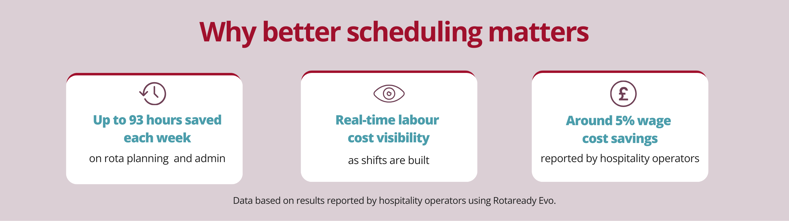
As guaranteed hours, advance notice and cancellation pay come into force, this level of control can help operators stay compliant without driving labour costs up.
Ensuring compliance with zero-hours reform, beyond staff scheduling
While hospitality rota software addresses the operational heart of zero-hours reform: from how shifts are planned, published and changed, to absence tracking and contract management. It doesn’t stop there
Staff training and ensuring payroll accuracy is also key. A joined-up people management approach, such as Hospitality People Suite, helps ensure guaranteed hours, notice rules and day-one rights are applied consistently across sites, as well as ensuring your teams are trained on the relevant legislation, with clear records to support fair treatment as Employment Rights Act requirements expand.
That consistency becomes increasingly important as expectations shift from informal flexibility to predictable, well-evidenced ways of working across hospitality teams.
Next steps for hospitality employers under the Employment Rights Act
In this article, we’ve looked at how zero-hours contracts are changing under the Employment Rights Act, what those changes mean for hospitality operators, and how rotas, contracts and people processes will need to adapt in practice.
If you want to understand how these changes apply to your business or how to move from informal zero-hours working to a more predictable, compliant model, speak to our team to learn how Hospitality People Suite and our tailored solutions can support you. For more resources regarding the legislation, visit our Employment law & rota compliance hub.