

 AU & NZ
 SG
SG
 MY
MY
 US
US
 IE
IE


Why is balancing work and family life important for large employers?
Large employers have diverse workforces with different family responsibilities, so policies and culture need to support a wide range of family situations in a fair and consistent way.
Balancing work and family life affects performance, wellbeing and retention. When employees cannot manage their caring responsibilities alongside their job, organisations often see reduced productivity, higher levels of burnout, more unplanned absence and greater turnover. Research from the CIPD Good Work Index 2025 suggests that employees who experience better work life balance are generally more productive and more engaged in their roles.
The ability to balance work and family life also shapes how people view prospective employers. Skilled workers increasingly look for organisations that offer predictable schedules, reasonable flexibility and a culture that recognises the realities of family responsibilities. Employers that fall short risk limiting their appeal in competitive labour markets.
Many candidates now look for employers that recognise the realities of family responsibilities and offer support beyond salary alone. Zoe Wilson, Director of ReThink HR notes:
“We’re not just happy with a salary anymore. We want so much more from our employers in terms of investment in me as a professional, employee benefits that make my work life balance easier. The flexibility, there are so many stats saying people would take less money over flexibility. And if you have really good family friendly benefits, people care a lot more about that balance between work and home and whether the company does that well.”
Large organisations have responsibility in this area because they operate across multiple sites and functions, often with varied shift patterns and job types. This scale means that any gaps in policy or culture are felt by large numbers of employees. It also gives these employers the ability to set stronger standards for inclusion and fair treatment, especially for colleagues who have children or other caring roles.
Culture, in particular, can be difficult to manage across distributed organisations as local customs may affect your culture building; discover more on how to build and maintain culture in large, distributed organisations in our blog.
Support for families also sits within broader inclusion, equity and wellbeing programmes. When family support is integrated into these areas, it helps build environments where employees can stay healthy, feel included and remain committed to their work.
What challenges do employees face when balancing work and family life?
Employees in large organisations experience different pressures depending on role type, location, working pattern and caring responsibilities.
What causes family‑related stress at work?
Many employees face practical barriers that make family and work life balance difficult. Long commutes, extended hours, shift work and unpredictable workloads can limit the time people have with their families. Hybrid patterns can also create inconsistencies, especially when teams have conflicting expectations about when employees need to be on site. Smart workforce management tools, like our Access PeopleXD Evo Workforce Management software, can help large employers design predictable, fair shift patterns that support both operational needs and family life.
Family responsibilities vary widely. Some employees care for more than one dependent. Others need to manage school pickups, childcare gaps, illness or last-minute changes to family routines. These pressures often build up, creating feelings of guilt, overwhelm and strain on personal relationships.
How does poor family and work life balance affect productivity and wellbeing?
When personal and family demands contribute to sustained stress, the impact is reflected in the workplace. Elevated stress levels are associated with fatigue, impaired concentration and reduced effectiveness at work.
The CIPD Health and Wellbeing at Work Report 2025 identifies stress as one of the leading causes of sickness absence and a key driver of presenteeism, where employees continue working while unwell. These patterns carry clear productivity and cost implications for employers.
Turnover can increase when employees feel unable to sustain their responsibilities at home and at work. Lost expertise affects teams and managers, who often absorb additional workload when colleagues are absent or leave the organisation. Over time, these pressures can undermine team stability and overall performance.
How do modern families navigate work life balance today?
Family structures and expectations have changed in ways that do not match older working patterns. Many households may now rely on two incomes, which reduces the flexibility families once had to absorb caring responsibilities. Paid work is no longer centred on one full‑time earner supported by someone who can take on care at home.
Childcare costs have increased faster than wages in many areas. This creates financial pressure and forces families to weigh up working hours, income and the availability of suitable care. The rise in costs looks like this:
- Average childcare fees in England rose by over 9 % in the year to 2024, with under-two fees increasing from £6.05 to £6.60 per hour (NMT Magazine)
- In major urban areas like Inner London, full-time childcare for an under-2 can exceed £30,000 per year — approaching 70% of a median working parent’s take-home pay — while average nursery costs nationwide have grown roughly 20 % over five years versus median earnings up only about 10-15 % in the same period. (Nuuri Insights)
More employees are also part of the sandwich generation. They may be caring for children and supporting ageing parents at the same time, which increases emotional strain and makes day‑to‑day plans harder to manage.
Technology and hybrid working have given some individuals greater control over how and when they work. When this is applied consistently, it can ease the pressure on families. Discover more about technology that can help both enhance productivity and improve work life balance in our blog.
However, large organisations often find it difficult to provide the same level of flexibility across different roles. Shift‑based, frontline and operational staff may not have access to arrangements that office‑based colleagues take for granted. This difference has become a key factor in how employees judge fairness and access to work life balance.
The gap is particularly evident for shift‑based and frontline staff, where real flexibility is often limited; 60% of shift workers report that their schedule isn’t flexible. Emma Parkin, Head of Propositions at Access Group, discusses flexibility for shift workers and more issues that business deal with from a workforce management perspective in Strategic Workforce Management: Right People, Right Place, Right Time.
These challenges highlight how important it is for large organisations to manage shift patterns in a way that supports both operational needs and fairness for employees. For teams looking to strengthen this area, our practical guide on shift pattern design offers clear steps and templates that can help.
What can large employers do to support employees in balancing work and family life?
Improved work–family balance requires aligned change across policy, operational processes and day-to-day management culture. If the initiatives are isolated, they may feel insufficient and ultimately disingenuous. Employees place significant weight on communication and trust with their employers and that extends to flexible working practices.
How can flexible working policies help?
Flexible working can give employees more control over their time, which supports family and work life balance. Useful options include job sharing, compressed hours, flexible start and finish times and hybrid working. These arrangements help employees manage school schedules, caring responsibilities and day to day family tasks.
Large organisations need to consider how these options work in practice. Scheduling, coverage and fairness must be planned carefully so that operational needs are met, and teams can rely on clear expectations. Discover 7 best practices for effective employee scheduling in our blog.
Strong policy documentation helps managers apply flexibility consistently, and training gives them the confidence to handle requests and conversations about individual circumstances.
The UK Government updated flexible working rules in 2024, introducing a day-one right to request flexible working, allowing employees to make up to two requests per year, shortening the employer response timeframe to two months, and requiring employers to consult with employees before refusing a request.
What role does technology play in supporting balance?
Technology can remove barriers that make family and work life balance harder. Remote working tools, scheduling systems and communication platforms allow teams to stay connected without requiring people to be in the same place. Managers also gain better oversight of workloads and availability, which can help avoid unnecessary time pressure.
Digital tools that reduce admin tasks can make a meaningful difference for employees with caring responsibilities. Simple processes for leave requests, rota changes or expense claims save time and reduce stress. Accessibility also matters. Systems that work reliably across different devices ensure that shift workers, frontline teams and remote employees have equal access to the tools they need.
Technology also shapes the quality of day-to-day experience. When systems are confusing or unreliable, it creates friction that prevents employees from feeling supported. Zoe Wilson explains:
“People can be switched off really easily if your systems aren’t giving you what you need and it means it is a poor experience in whatever vein. When you have something that makes sense and is logical and it all looks and feels the same, it is easy to maintain. It is easy to use the analytics to actually drive decisions.”
Self-service tools, like Access PeopleXD Employee Self-Service software, can help alleviate these issues, making it easy for teams to request leave, swap shifts or check schedules from any device.
How do employee benefits support family and work life balance?
Employee benefits play a direct role in helping people balance work and family life. Salary sacrifice childcare schemes can improve affordability for parents. Holiday trading allows employees to buy or sell leave to suit their circumstances. Discover more about salary sacrifice schemes and how they can benefit you and your family in our blog.
Other forms of support, such as emergency leave, compassionate leave or wellbeing days, provide vital breathing space during challenging periods.
Financial wellbeing support can help families manage household costs more confidently, particularly when childcare, transport and energy expenses are rising. For large organisations, consistency is essential. Benefits should be accessible across sites, job grades and working patterns so that employees feel they are treated fairly.
Why does manager capability matter?
Managers have a major influence on whether flexibility works in practice. They are often responsible for approving requests, adjusting workloads and setting norms for their teams.
Training and clear guidance help managers handle conversations about work life balance and understand the range of options available. Management that doesn’t have the capability to support their employee’s work life balance can cost your business in many ways; our blog details those hidden costs and how to turn the tide.
Reducing stigma is also important. Employees need to feel comfortable discussing family responsibilities without worrying about judgement or negative consequences. Managers who apply policies fairly and communicate openly create teams where people can manage work and family commitments more effectively.

How can employers measure whether they are supporting family and work life balance effectively?
Large employers need measurable indicators to evaluate whether their efforts are improving outcomes for employees and organisational performance.
Employers can use a range of data sources to understand whether their policies and culture are making a difference. Useful measures include:
- Tracking absence patterns, turnover rates, engagement scores and productivity indicators to spot trends linked to family pressures.
- Running regular employee surveys that ask about work life balance, caring responsibilities and the practical barriers people face.
- Reviewing the uptake of family related benefits, such as childcare support, flexible working options or leave policies.
- Comparing data across departments, sites and job types to identify gaps in access, consistency or fairness.
- Benchmarking results against sector data to understand how performance compares with similar organisations.
These measures help build a clearer picture of what is working, where policies need strengthening and how employees experience support across different parts of the organisation.
Example frameworks and best‑practice approaches for large businesses
Providing a repeatable framework helps ensure consistency across large and dispersed organisations.
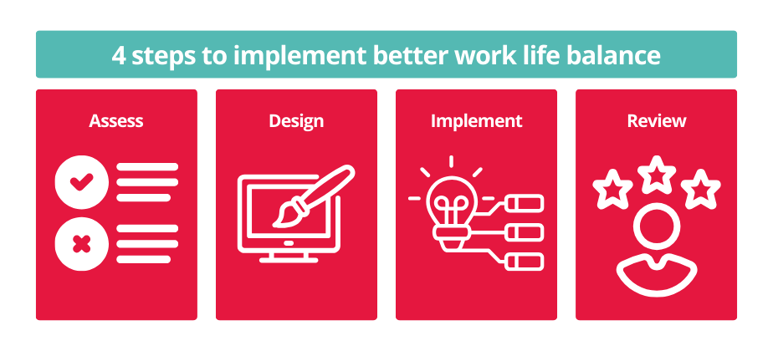
A simple approach that works well at scale is a four‑step model:
- Assess: Review current policies, data on absence and turnover, employee survey results and feedback from managers. Identify where family support is uneven or missing.
- Design: Develop policies and benefits that address the most common pressures on families. Include flexibility options, leave arrangements and clear guidance for managers.
- Implement: Roll out changes across locations and functions, supported by training, communication plans and practical tools.
- Review: Measure uptake, evaluate outcomes and adjust the framework based on ongoing feedback and organisational performance.
Why supporting family and work life balance benefits everyone
Supporting family and work life balance delivers clear business benefits. Organisations that help employees manage caring responsibilities often see stronger retention, better engagement and more consistent performance. These practices also contribute to inclusion and wellbeing, which shape how people experience their working environment and how long they choose to stay.
Large employers have a particular responsibility to build policies and cultures that recognise the realities of diverse families. When support is applied fairly across locations, roles and job grades, employees feel they can manage both their work and their responsibilities at home. This creates a more stable workforce and improves the quality of working relationships across teams.
There is also a competitive advantage. Candidates increasingly look for employers that offer predictable schedules, practical benefits and a culture that respects family life. Organisations that demonstrate this commitment stand out in a crowded labour market.
Ready to create a workplace where employees can balance work and family life with confidence?
Access software helps large organisations support their workforce on every front, from smarter, fairer scheduling that gives teams the flexibility they need, to employee benefits that make family life more affordable and less stressful. When your people feel supported at home and at work, everyone performs at their best.
Explore how our workforce management tools and employee benefits platform can help you build a more supportive, family‑friendly organisation.
