AU & NZ
 SG
SG
 MY
MY
 US
US
 IE
IE


What is digital volunteering?
Digital volunteering is any kind of volunteering that’s carried out online, or supported by digital technology.
Instead of being in a charity office, shop or community centre, digital volunteers contribute remotely, using phones, laptops and apps to support the causes they care about.
That might mean social media support, digital fundraising, mentoring via video call, moderating online communities, completing research, translating documents, running virtual events, or helping with admin and data tasks. Increasingly, many roles are hybrid too, with volunteers doing some tasks online and others in-person.
Digital volunteering is no longer a “nice-to-have”. It’s fast becoming a core part of how charities recruit, support and retain volunteers in a more flexible, digital-first world.
Why digital volunteering is growing
A combination of social, technological and economic factors is accelerating the shift. The latest Community Life Survey tells us:
Volunteer numbers are under strain
In England in 2023/24, 16% of adults took part in formal volunteering at least once a month — the lowest rate recorded since the Community Life Survey began using its current methodology. At the same time, 54% of adults took part in either formal or informal volunteering at least once in the last year.
That mix tells a clear story: lots of people still want to help, but they’re less able to commit to regular, traditional roles.
More volunteering is happening online
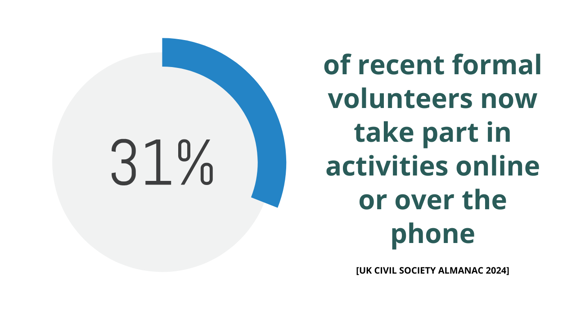 According to the UK Civil Society Almanac 2024 (drawing on the Time Well Spent survey), about 31% of recent formal volunteers now take part in activities online or over the phone. Remote and digital volunteering has become a normal, established part of the volunteering mix, not an exception.
Employer-supported volunteering is a major untapped opportunity
A 2025 report by the Royal Voluntary Service adds:
- 30.06% of UK workers are offered paid volunteering days
- that’s around 10.2 million people
- together, they’re gifted an estimated 23.8 million days a year, roughly 190 million volunteering hours
However, only around a quarter of those hours are actually used, leaving more than 140 million hours of potential volunteering time unused each year. Digital volunteering can make it far easier for employers and employees to find flexible, remote roles that fit around work and life.
All of this points in one direction: charities that design attractive, accessible digital volunteer opportunities are better placed to reach, re-engage and retain volunteers.
Examples of digital volunteering opportunities
Digital volunteering is flexible, inclusive and wide-ranging. Common digital roles include:
Skills-based digital volunteering
Volunteers use their professional expertise to deliver high-impact support remotely, such as:
- Website updates, UX improvements or coding
- Graphic design, branding and content creation
- Copywriting, email marketing and social media support
- Database management and data cleansing
- Digital fundraising strategy or CRM tasks
Micro-volunteering
Quick, low-commitment activities that suit busy supporters:
- Proofreading a campaign page
- Tagging or categorising photos
- Translating short content
- Sharing posts to amplify awareness
- Completing small research tasks
These tasks don't tend to take long but, collectively, they make a significant difference.
Remote mentoring and support
Digital volunteers can:
- Mentor students online
- Offer digital befriending to reduce loneliness
- Support helplines and chat-based services (with training)
- Moderate online communities or forums
Hybrid roles supported by tech
Even in-person roles can be digitally enhanced through:
- Self-service onboarding
- E-learning modules
- App-based rotas and shift swapping
- Centralised communication tools
Digital volunteering isn’t separate from traditional volunteering — it strengthens it.
What are the benefits of digital volunteering?
For charities
Digital volunteering and well-structured digital volunteer opportunities help organisations:
- Reach more people, including those outside the local area
- Attract a wider mix of skills, from data analysis to design
- Make volunteering more inclusive, removing barriers like travel, time and mobility
- Streamline onboarding and training, through digital processes
- Improve resilience, so services continue even when in-person activity is disrupted
For volunteers
Digital roles offer:
- Flexibility to volunteer around work, family or health needs
- Skill development and opportunities to build CV-ready experience
- More choice, from micro-tasks to skilled roles
- Clearer impact, with digital tracking of hours and outcomes
For many people, digital volunteering is the easiest — and sometimes the only — way to stay engaged with causes they care about.
How to design strong digital volunteer opportunities
If you’re building or expanding your digital volunteering programme, these steps will help:
Start with your goals
Clarify what you want digital volunteering to achieve — capacity building, service delivery, digital comms support, stronger supporter care, and so on.
Identify digital-friendly tasks
Map tasks that don’t require a physical presence: content creation, admin, fundraising support, mentoring, community management, data work, evaluation and research.
Offer a range of commitment levels
Combine ongoing digital volunteering roles with one-off or micro-volunteering to appeal to different lifestyles and time budgets.
Make the journey digital-first
Use volunteer management software to simplify:
- Applications
- Onboarding and checks
- Training and resources
- Communications
- Scheduling and rota management
- Impact reporting
Tools like Access Assemble help create consistent, streamlined journeys for all volunteers — whether their role is fully digital, fully in-person or hybrid.
Provide training and support
Not every volunteer will feel confident online. Offer clear guides, FAQs, digital skills training where appropriate, and human support — especially for those using new systems for the first time.
Track and celebrate impact
Digital tools make it easy to log volunteer hours, record achievements and share success stories — including for digital volunteering and hybrid roles. That feedback loop helps volunteers see the difference they’re making.
The future of volunteering is digital, flexible and accessible
Now we know that digital volunteering isn’t just a trend — it’s a fundamental shift in how people want to give their time.
By creating clear, inclusive and well-supported digital volunteer opportunities, charities can reach more people, unlock more skills, and build resilient volunteer programmes that can thrive no matter what the world throws at them.