

 AU & NZ
 SG
SG
 MY
MY
 US
US
 IE
IE

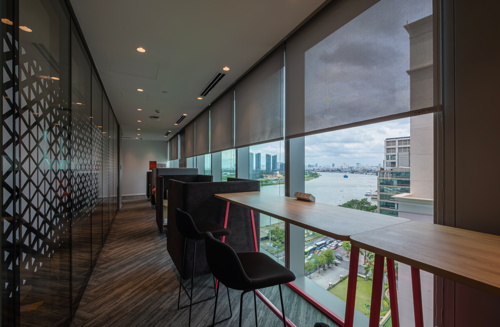
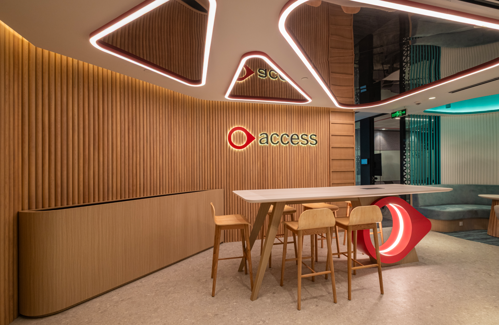
Located at the Riverfront Financial Center, the 1,354-square-metre workspace marks a significant step forward in the company’s global sustainability strategy. It features advanced eco-friendly design and technologies, building on the success of existing green offices in Loughborough, Timisoara, and Kuala Lumpur. This new facility serves as a tangible expression of The Access Group’s ongoing dedication to responsible and sustainable business practices.
“Working with The Access Group on their Vietnam office allowed us to show how sustainability and workplace excellence can seamlessly coexist. By selecting low-VOC paints and adhesives, we ensured uncompromised indoor air quality. We repurposed 150 existing chairs, introduced moss walls and biophilic elements that naturally purify air through the building’s own condensation system — each decision guided by the belief that environmental responsibility drives creativity. The result is a workplace that elevates employee wellness, inspires daily performance, and achieves an impressive 80% reduction in energy consumption.”
Strategic Location and Building Selection
The decision-making process for the Vietnam office centered on balancing environmental credentials with employee wellbeing. The team chose to locate in Ho Chi Minh City's central business district rather than newer outlying developments, prioritizing reduced commute times and improved accessibility for the existing workforce. This strategic choice eliminated the need for employees to navigate traffic-prone bridge crossings while securing a newly constructed building with superior environmental credentials at better-than-market rates.
The Riverfront Financial Center offered the perfect combination: a modern building with advanced sustainability features and the convenience of a CBD location. This approach demonstrates that environmental responsibility and commercial pragmatism can work hand in hand.
Intelligent Energy Management
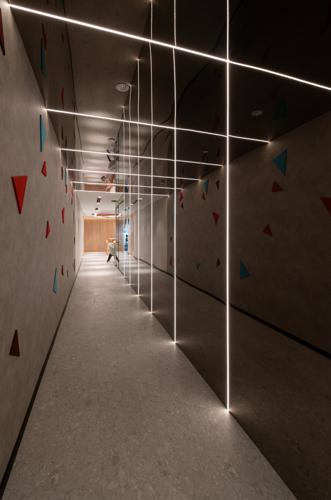
LED Lighting System: The entire office features 100% Unios LED lighting with intelligent PIR motion sensors that automatically adjust based on occupancy. With lifetime ratings exceeding 50,000 hours, these systems dramatically reduce both energy consumption and maintenance requirements. The lighting layout incorporates strategically placed sensors throughout the workspace, ensuring lights activate only when spaces are occupied and deactivate after preset delays when areas are empty.
Climate Control Innovation: The office features energy-efficient Daikin VRV air conditioning units delivering 82.7% energy savings compared to conventional systems. Crucially, supplementary air conditioning units serve the four multi-purpose meeting rooms, enabling small evening teams to work comfortably without cooling the entire office. This thoughtful design eliminates the significant expense of after-hours building air conditioning whilst dramatically reducing energy consumption and environmental impact.
Water Management and Waste Elimination
The office replaced traditional plastic water bottle systems with advanced Well The One water dispensers featuring 9-step nanofiltration. Achieving 1st grade Heater energy efficiency ratings, these systems eliminated ongoing plastic waste whilst providing superior water quality. The decision removed the space requirements and logistics of bottled water delivery whilst demonstrating how sustainable choices often deliver multiple benefits.
Comprehensive recycling facilities with dedicated bins for paper, glass/plastics, and food waste address a critical gap from the previous 170-person location, where inadequate space had prevented proper recycling programs.
Circular Economy Achievement
In a powerful demonstration of circular economy principles, the project successfully repaired and reused 150 existing Sunon office chairs that would otherwise have been discarded. Combined with just 34 new chair purchases, this initiative significantly reduced waste and environmental impact whilst maintaining ergonomic standards with Green Label and Greenguard certifications. This practical application of reduce-reuse principles saved resources and embodied carbon while proving that sustainability and quality need not be mutually exclusive.
Biophilic Design Elements
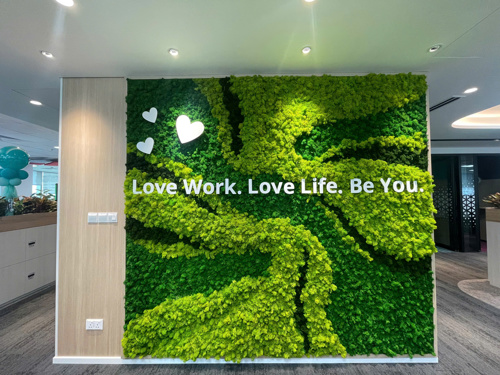
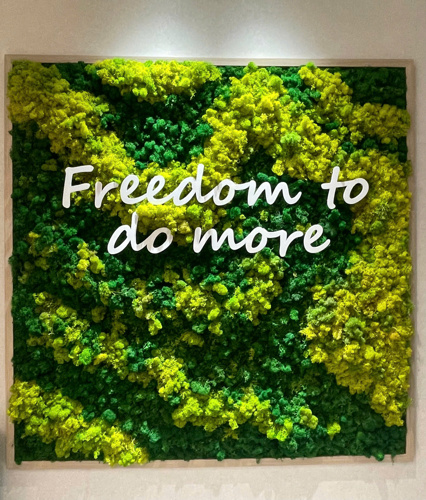
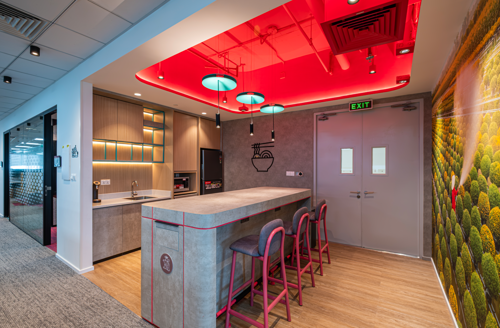
Living Moss Walls: The office features striking living moss walls with 90% sound absorption properties that naturally purify air using the building's air conditioning condensation system, requiring no additional watering. Initially met with resistance from local leaders concerned about mould and maintenance, education about the environmental and wellbeing benefits won enthusiastic support. The moss walls have become so popular that staff needed gentle reminders not to touch them.
Live Plants: Professionally maintained live plants throughout the office were also initially questioned by the local team worried about creating a "jungle" atmosphere. Demonstrations of successful plant integration in other Access offices, combined with assurances about professional maintenance, transformed skepticism into appreciation for these natural air purifiers and aesthetic enhancements.
Comprehensive Sustainable Materials Strategy
Every material selection for the 200-person office underwent rigorous environmental scrutiny, with preference given to certified sustainable and recyclable options:
Flooring and Surfaces:
- Green Label certified SMJ carpet tiles with low toxicity emissions
- Singapore Green Building Council (SGBC) certified vinyl flooring
- Tuntex carpet adhesive achieving SGBC's highest 4 Ticks certification
Construction Materials:
- Knauf gypsum boards with Singapore Green Building Council certification for both standard and fire-resistant applications
- An Cuong joinery materials with Greenguard certification for low chemical emissions
- Castle Vietnam acoustic panels with Global Recycled Standard (GRS) certification
- Jotun paints meeting LEED V4.1 standards with verified low VOC emission
Glazing and Partitions:
- JEB aluminium-framed interior glazed partitions achieving LEED V4.1 compliance
- Acoustic laboratory testing confirming sound transmission class (STC) ratings of 39-45 for doors and partitions
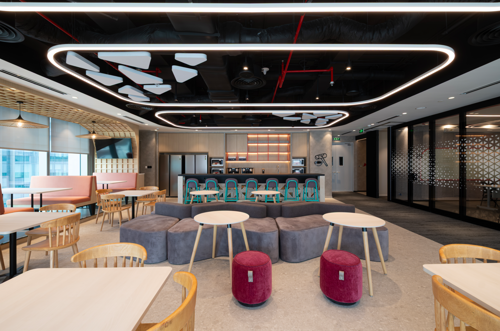
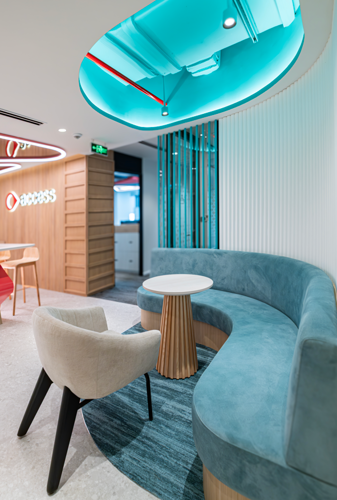
Flexible Workspace Design
The office provides employees with diverse workspace options supporting different tasks and working styles:
-
Traditional and sit-stand adjustable desks
-
Private phone booths for confidential conversations
-
Collaborative areas for brainstorming sessions
-
Café-style seating for informal meetings
-
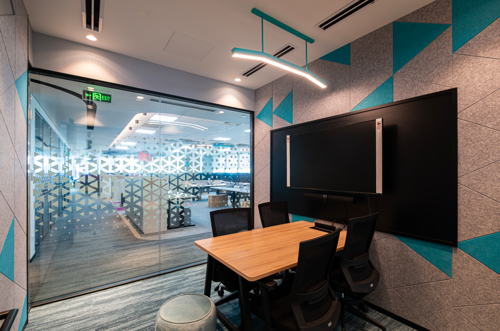
Four multi-purpose meeting rooms with retractable walls for training and all-hands gatherings
This variety optimizes space utilization whilst supporting productivity and employee satisfaction.
Security and Accessibility
The facility implements multi-layered security protocols whilst maintaining an open, welcoming atmosphere. Building reception verification, turnstile access control, and programmable access cards with zone-specific permissions ensure comprehensive security. Restricted areas including the IT server room and finance zones require special authorization, balancing security requirements with operational efficiency.
Lessons Learned and Global Application
The Vietnam office incorporated crucial learnings from Access Group's previous fit-out of the Kuala Lumpur Global Operations Centre, ensuring continuous improvement in sustainable office design across the company's global portfolio. The project demonstrates that initial resistance to innovative sustainable features can be overcome through education and evidence-based communication about environmental and practical benefits.
Conclusion
The Access Group's Vietnam office serves as a model for sustainable workplace development, proving that environmental excellence, employee wellbeing, and operational efficiency can be achieved simultaneously. By incorporating certified sustainable materials, innovative energy management, circular economy principles, and biophilic design, the project sets new standards for corporate environmental responsibility in Southeast Asia. The office's success provides a blueprint for future Access Group developments and demonstrates the company's genuine commitment to environmental leadership in the business software sector.