

 UK
UK
 AU & NZ
 SG
SG
 US
US
 IE
IE

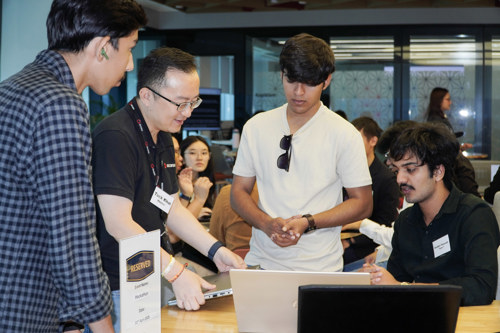
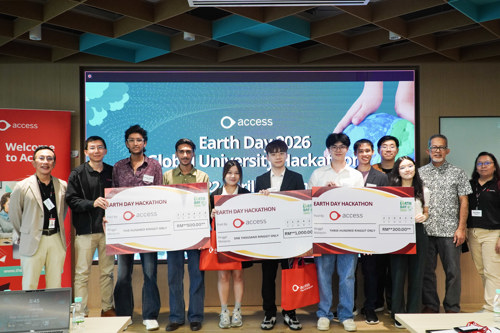
The Kuala Lumpur event takes place on Earth Day, 22 April, at the Access Global Operations Centre in Kuala Lumpur with 29 students from 5 universities including: INTI International University, Sunway University, University of Technology Malaysia (UTM), Asia Pacific University of Technology & Innovation (APU), and Lincoln University College.
Across all locations, students were tasked with identifying real environmental problem areas, including energy efficiency, carbon reduction, water stewardship and waste minimisation and applying AI responsibly to develop solutions that could be realistically adopted by SMEs.
The hackathon sits at the intersection of two urgent global priorities: the transition to a greener economy and the widening AI skills gap. Clean energy employment is projected to grow significantly by 2030, while global forecasts point to tens of millions of new green jobs worldwide. Yet employers continue to report a shortage of people with the combined technical, data, and sustainability skills required to fill them.
By working directly with universities, Access designed the hackathon to give students hands-on experience applying AI to genuine environmental challenges in an environment that reflects how technology is deployed inside real businesses.
Winning idea
The winning idea from the KL event came from a team of 2 Computer Science and Actuarial Science students from Asia Pacific University of Technology & Innovation (APU), Low Yan Cheng and Agnes Lim (both Year 3), who developed ForestGuard, an AI-powered EUDR compliance platform that helps Malaysian palm oil smallholders generate legally recognised Due Diligence Statements in under 10 minutes using only WhatsApp and satellite data.
ForestGuard uses a six-agent AI pipeline to automatically verify smallholder farm boundaries, check 24 years of satellite deforestation history, confirm crop identity, and assess compliance against EU Deforestation Regulation requirements without the farmer needing a smartphone app, GPS device, or technical knowledge. The system produces a signed and timestamped compliance document, ready for direct submission to EU customs, reducing the compliance cost from RM 15,000 per plot to RM 20 per plot while protecting 450,000 Malaysian smallholders from being cut off from the European market on 30 December 2026.
Low Yan Cheng, Year 3, BSc Computer Science in Data Analytics, Asia Pacific University (APU)
I built ForestGuard because this problem is personal. My parents ran a palm oil smallholding in Johor and when the EUDR notice came, they had thirty years of receipts but not a single map. Every compliance tool I found was built for large estates with GIS teams and six-figure budgets. I wanted to build something that works for someone who only has a phone and a WhatsApp account, because that is most of Malaysia's smallholders and they did nothing wrong.
Other ideas from the day
Other ideas developed during the hackathon included MinyakAI, an AI tracking system for Malaysian SMEs to recycle used cooking oil and prevent water pollution; JimatSaji, a smart platform that redistributes surplus meals to tackle food waste and lower greenhouse gas emissions; and WasteWise, AI-powered smart bins that improve accurate waste sorting to boost recycling rates.
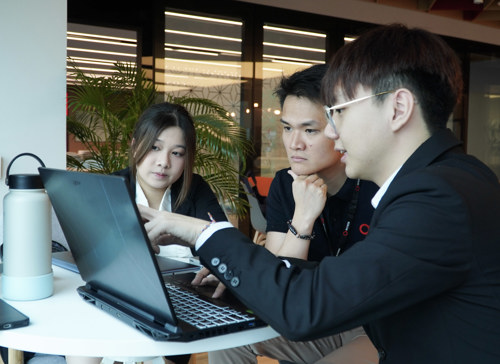
Students were supported throughout the day by Access mentors, who coached teams to think beyond technical performance, encouraging them to consider energy efficiency, bias, explainability and real-world feasibility from the outset.
Chee Gay, Managing Director, Access Centre Kuala Lumpur
AI without sustainability is shortsighted. Sustainability without AI is outpaced. The future belongs to the talent who can do both and that’s exactly who we are here to grow.
In KL, the judging panel included Associate Professor Dr. Farhad, Associate Professor Dr. Lai Mun Keong, David Boyar (Manager), Shawn Suresh (VP Technology), and Derek Chan Mun Hoe (Software Engineering Head), who assessed projects on environmental impact, technical approach, feasibility and responsible AI use.
Dr. Farhad, Associate Professor
The calibre of talent at this hackathon was remarkably high, characterised by a professional yet high-energy atmosphere where innovation truly flourished. I was particularly impressed by the winning project, which offered a rare trifecta of genuine human impact, sustainability, and business scalability. Beyond the technical skills, these students demonstrated the grit and strategic mindset required to navigate complex real-world challenges. In my view, every participant successfully transitioned from identifying a problem to architecting a solution, proving they are ready to lead the future market.
Encik Wan Murdani Bin Wan Mohamad, VP of Digital Adoption, Malaysia Digital Economy Corporation (MDEC)
We were genuinely impressed by the calibre of ideas these students produced within such a short timeframe just a single day. What stood out was not only their technical creativity, but also the strong sense of responsibility in how they approached real-world challenges. Initiatives like this, where industry collaborates directly with universities to provide students with hands-on exposure to enterprise AI, are critical in closing the skills gap and preparing future-ready talent.
As MDEC marks its 30th anniversary of championing Malaysia’s digital economy, we remain committed to developing talent that supports sustainable and responsible growth. Digital sustainability is central to Malaysia’s digital ambitions, and building the right capabilities will be key to realising Malaysia’s vision of becoming an AI Nation by 2030.” ensuring that our digital growth remains both competitive and responsible.”
The Global University Hackathons form part of Access's ongoing commitment to developing the skills the future economy needs, giving young people from a wide range of disciplines practical exposure to enterprise-grade AI and the responsibilities that come with its use.